NAWM
The National Association of Wetland Managers is a nonprofit membership organization established in 1983 to promote and enhance protection and management of wetland resources, to promote application of sound science to wetland management efforts and to provide training and education for our members and the public. Membership is open to anyone who is involved with wetland resources.
Modeling Beavers, Springs, and Seeps
Held Wednesday, October 11, 2023 - 3:00 p.m.-4:30 p.m. ET
INTRODUCTION
- Ian Grosfelt, National Association of Wetland Managers [PRESENTATION PDF]
PRESENTERS
- Sarah Marshall, Colorado Natural Heritage Program [PRESENTATION PDF]
- Mike Knudson, GeoSpatial Services, St. Mary's University of Minnesota [PRESENTATION PDF]
ABSTRACTS
Developing High Resolution, Frequently Updated Wetland and Beaver Activity Maps for Colorado and the West using Machine Learning Techniques, Sarah Marshall, Colorado Natural Heritage Program - Sarah Marshall
As Colorado and the West experience increasing impacts of climate change and human population growth, wetlands and riparian areas are central to any discussion of future water supply. One critical barrier to incorporating wetlands into statewide habitat, water and natural hazard mitigation planning is a lack of recent, frequently updated wetland mapping with coverage across states and river basins. This gap is particularly relevant for the most dynamic wetland types such as headwater floodplain wetlands where wetted areas may change in extent on a scale of 1-10 years. The Colorado Natural Heritage Program (CNHP) and Lynker are collaborating to overcome this barrier by developing remote-sensing based wetland mapping that can be updated to capture past, current, and future wetland conditions. Using a combination of machine learning techniques and iterative expert training and feedback, the project team has worked to model and map wetland boundaries and identify specific wetland features including beaver ponds. Sarah Marshall with CNHP will present on the team’s work across Colorado and the Colorado River basin.
Evaluation of Prevalence Probability Prediction of Ground Water Discharge Springs in Missouri using the MaxEnt Machine Learning Algorithm - Mike Knudson
This project was an exploratory effort to assess the ability of geospatial and machine learning based modeling to predict presence of ground water discharge springs in a pilot study area. Field investigation to locate ground water discharge springs can be time consuming in large geographical areas, especially in areas that are difficult to access. Model development was based primarily on the methods developed by Gerlach et al. (2022). The authors identified six topographic variables as important for locating ground water discharge springs using the MaxEnt model: elevation, planform curvature, profile curvature range, distance to flowlines, terrain ruggedness index (TRI), and flow weighted slope (FWS). For this pilot project, we evaluated performance of these six predictor variables in locating springs in the pilot study area using a MaxEnt machine learning model. We also identified 10 additional variables that were commonly used in geospatial modeling of ground water discharge and evaluated them as potential predictor variables in the analysis.
BIOS
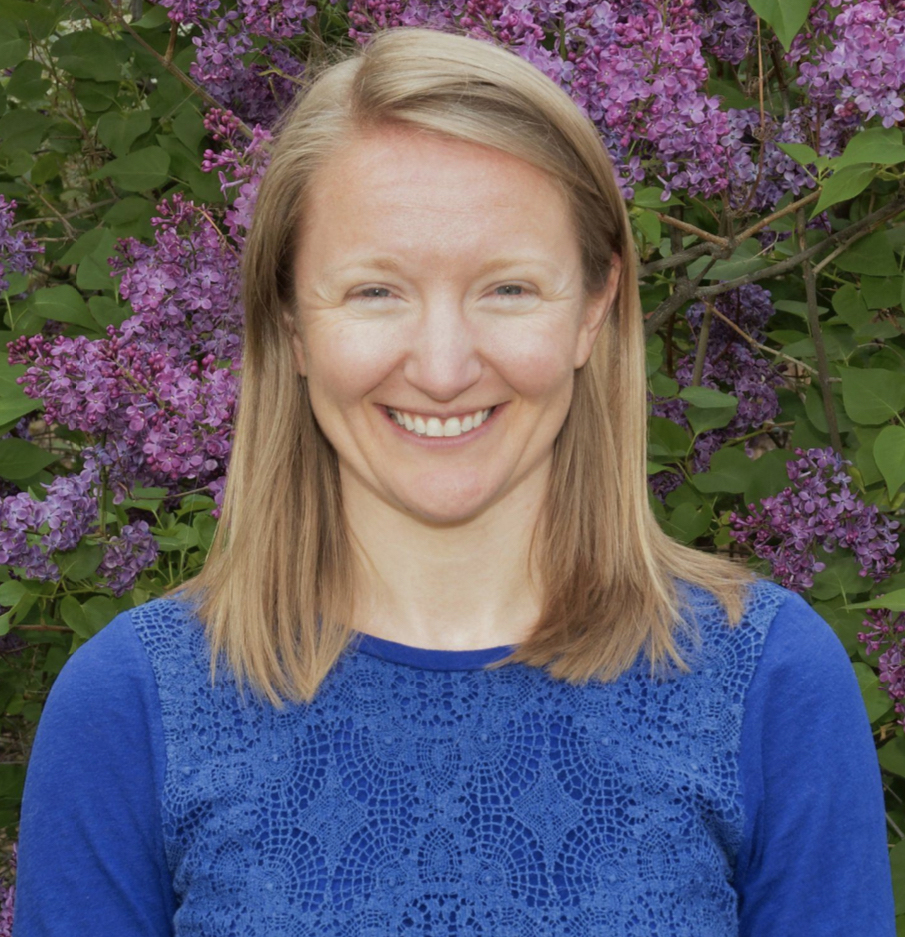 Sarah Marshall is an ecohydrologist with the Colorado Natural Heritage Program at Colorado State University. Sarah has nearly two decades of experience working with wetland and riparian ecosystems in the western U.S. She has a Ph.D. in Water Resources Engineering, with expertise in ecological restoration and the effects of land use and management on wetland hydrology, soils, and ecology. Her current work focuses on large-scale wetland mapping to help identify high-priority wetland conservation and restoration areas to meet water quality, water supply, and habitat needs in a changing climate. She has also developed a suite of tools and protocols to help understand, manage, and assess the ecological condition of wetlands across Colorado and the West.
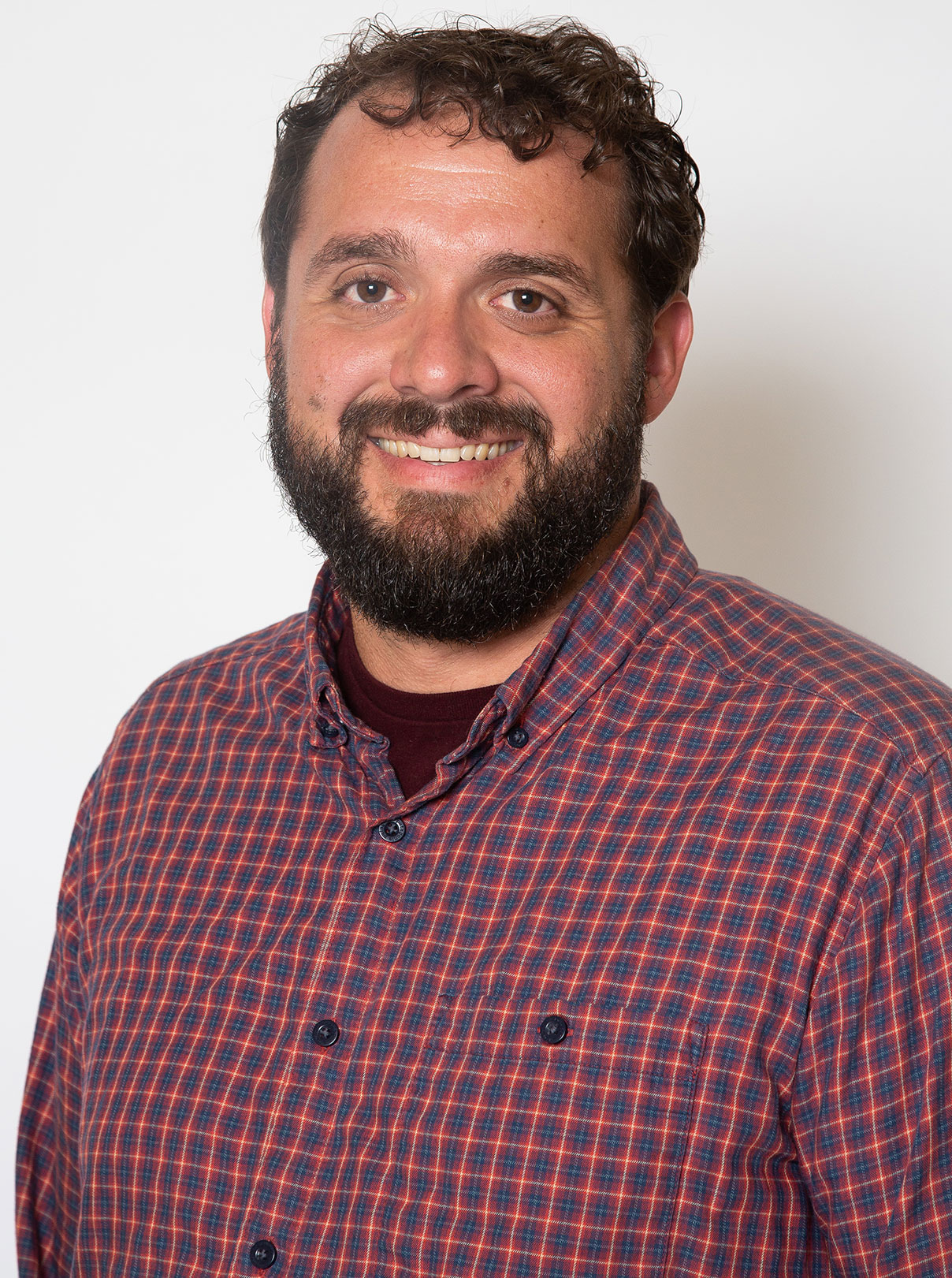 Mike Knudson has been a GIS Analyst at GSS since January 2021. In 2010, Mike earned his B.S. in Natural Resources from the University of Minnesota. In 2014, he obtained an M.S. from the University of North Dakota in Earth System Science and Policy. His research areas integrate remote sensing and environmental monitoring to create data products that inform decision making. He currently serves GSS as a data support specialist assisting with a multitude of wetland mapping and functional assessment projects along with wetland probability modelling. He enjoys traveling and wilderness exploration with his wife and two children, along with wood crafting and upland bird hunting.
Please click only once on each video recording to view in this window.

Part 1: Introduction: Ian Grosfelt, National Association of Wetland Managers
Presenter: Mike Knudson, GeoSpatial Services, St. Mary's University of Minnesota





Canadian Wetland Inventory Activities in the Prairie and Boreal Regions of Canada
Held Wednesday, August 30, 2023 - 2:00 p.m.-3:00 p.m. ET
INTRODUCTION
- Ian Grosfelt, National Association of Wetland Managers [PRESENTATION PDF]
PRESENTERS
- Lyle Boychuk, Ducks Unlimited Canada [PRESENTATION PDF]
- Rebecca Edwards, Ducks Unlimited Canada [PRESENTATION PDF]
BIOS
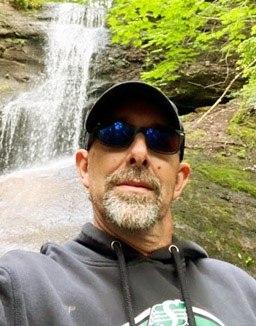 Lyle Boychuk is the Manager of GIS and Inventory Programs; Prairie Region for Ducks Unlimited Canada. Lyle has been working in geomatics for 27 years and is currently in his 23rd year of service with DUC. He manages a team of specialists responsible for building GIS applications in support of conservation programs and managing the delivery Canadian Wetland Inventory (CWI) projects across Prairie Canada. His professional interests include the use of remote sensing to characterize Prairie Wetlands, the application of terrain data for quantifying wetland hydrology; and the use of UAV technology to support conservation program delivery.
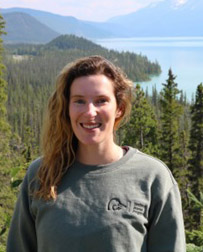 Rebecca (Becky) Edwards is the lead remote sensing specialist for DUC’s National Boreal Program. She completed her MSc in Geography specializing in remote sensing from Queen’s University focusing on vegetation change in the Arctic. Becky has been working with DUC for over 7 years with experience in wetland remote sensing, time series analysis, northern landscapes, and wetland ecology. She has led and supported many large-scale wetland inventory products across the Boreal to support the Canadian Wetland Inventory (CWI) and continues to advance novel wetland classification methodologies.
Please click only once on each video recording to view in this window.
Part 1: Introduction: Ian Grosfelt, National Association of Wetland Managers
Presenter: Rebecca Edwards, Ducks Unlimited Canada
Examples of semi-automation for mapping Cowardin classes and wetland vegetation in Alaska
Held Thursday, April 27, 2023 - 3:00 pm - 4:00 pm Eastern
INTRODUCTION
- Ian Grosfelt, National Association of Wetland Managers [PRESENTATION PDF]
PRESENTER
- Timm Nawrocki, Alaska Center for Conservation Science [PRESENTATION PDF]
ABSTRACT
Wetlands mapped according to the Cowardin Classification have frequently been delineated manually. Despite increasingly available remotely sensed data and access to large amounts of computational resources, automated approaches to mapping wetlands have been limited to ecologically coarse approaches. One challenge to automating the mapping of Cowardin classes is that the Cowardin Classification integrates contextual information that may not be directly represented in remotely sensed data. We have implemented a semi-automated strategy for wetland mapping that retains advantages of automation while enabling a wetland scientist to focus on providing the contextual information necessary to assign Cowardin classes. Additionally, we have implemented automated approaches to mapping wetland vegetation that could be modified by a wetland scientist to arrive at Cowardin classes. Semi-automation has potential to improve consistency, accuracy, and cost-efficiency of mapping Cowardin classes in Alaska and other areas where wetlands occupy large proportions of the landscape.
BIO
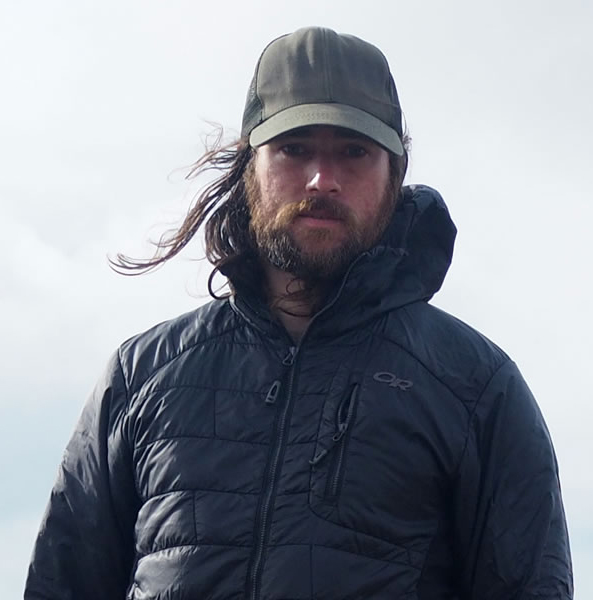 Timm Nawrocki received a B.S. in Biology from the University of Virginia and a M.S. in Biological Sciences from the University of Alaska Anchorage. He specializes in spatial analyses of terrestrial vegetation, soils, and wildlife; remote sensing; and identification of vascular and non-vascular plants. He is fluent in Python, R, SQL, Javascript, geographic information systems (GIS), and web development including a variety of frameworks, platforms, and languages.
Please click only once on each video recording to view in this window.
Part 1: Introduction: Ian Grosfelt, National Association of Wetland Managers
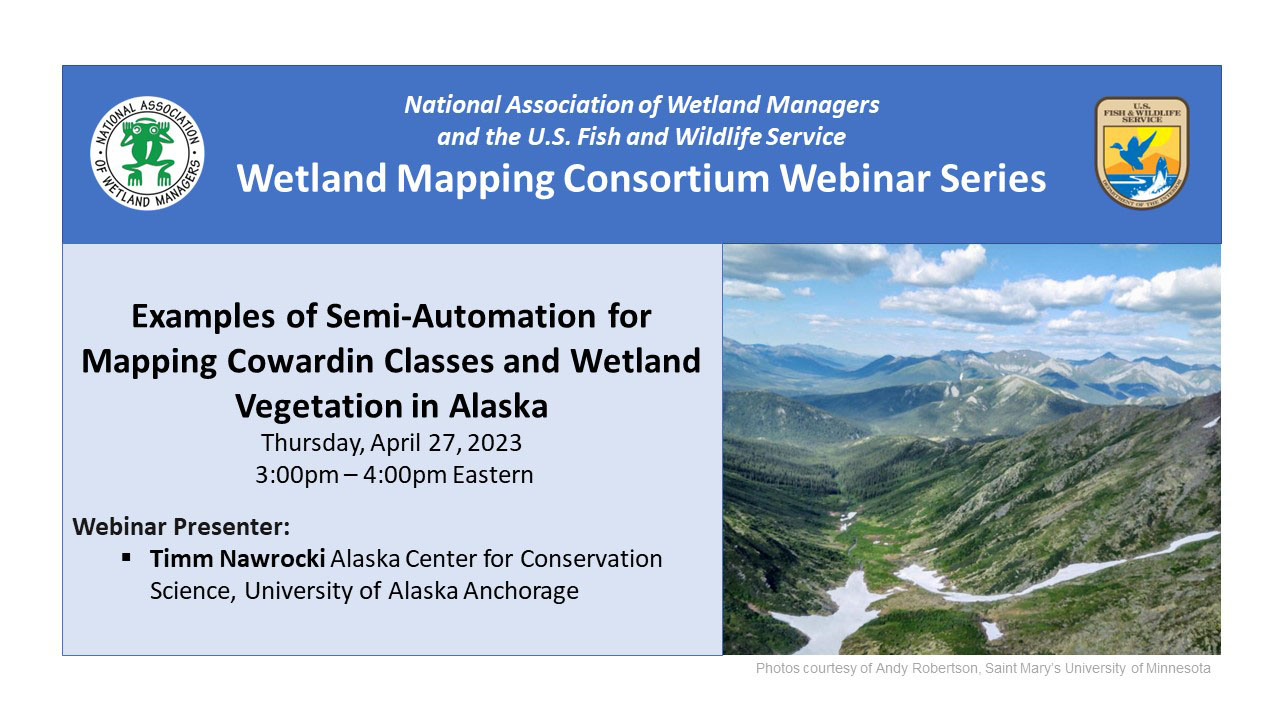
Presenter: Timm Nawrocki, Alaska Center for Conservation Science, University of Alaska Anchorage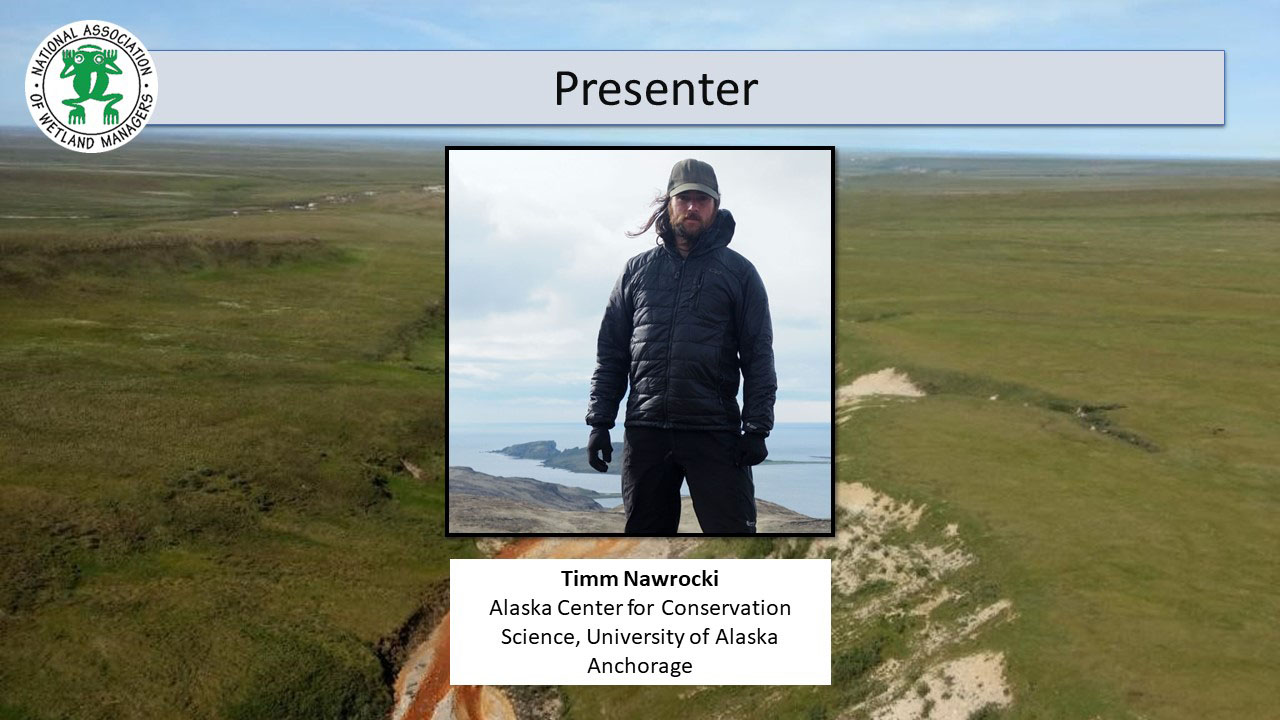
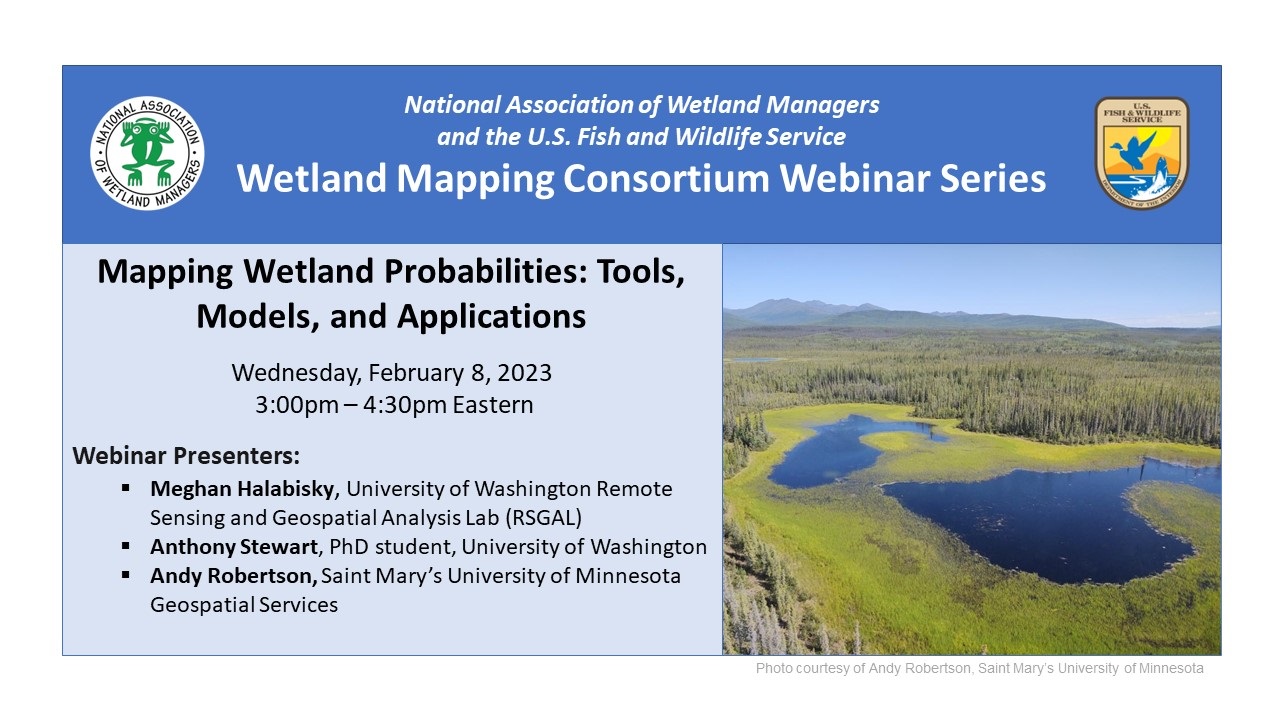
Mapping Wetland Probabilities: Tools, Models, and Applications
Held Wednesday, February 8, 2023 - 3:00 pm - 4:30 pm Eastern
INTRODUCTION
- Ian Grosfelt, National Association of Wetland Managers [PRESENTATION PDF]
PRESENTERS
- Meghan Halabisky, University of Washington Remote Sensing and Geospatial Analysis Lab [PRESENTATION PDF]
- Anthony Stewart, PhD Student, University of Washington [PRESENTATION PDF]
- Andy Robertson, GeoSpatial Services at Saint Mary’s University of Minnesota [PRESENTATION PDF]
ABSTRACTS
Meghan Halabisky
Accurate, un-biased wetland inventories are critical to monitor and protect wetlands from future harm or land conversion. However, most wetland inventories are constructed through manual image interpretation or automated classification of multi-band imagery and are biased towards wetlands that are easy to detect directly in aerial and satellite imagery. Wetlands that are obscured by forest canopy, occur ephemerally, and those without visible standing water are, therefore, often missing from wetland maps. To aid in detection of these cryptic wetlands, we developed the Wetland Intrinsic Potential tool, based on a wetland indicator framework commonly used on the ground to detect wetlands through the presence of hydrophytic vegetation, hydrology, and hydric soils. Our tool uses a random forest model with spatially explicit input variables that represent all three wetland indicators, including novel multi-scale topographic indicators that represent the processes that drive wetland formation, to derive a map of wetland probability.
Anthony Stewart
Inland wetlands disproportionately contribute to the soil organic (SOC) carbon pool by storing 20-30% of all SOC despite occupying only 5-8% of the land surface. However, difficulty identifying wetland areas under perennial forest canopy increases uncertainty in estimates of SOC stocks across watershed to regional scales. We used a machine learning approach that utilized aerial lidar-derived hydrologic and topographic metrics to characterize the landscape surface and identify areas of potential wetland formation for three study areas in the Pacific Northwest which represent an east-to-west (low-to-high) precipitation gradient. This approach produces a spatially explicit and continuous model of wetland probability as a range from wetland to upland across a landscape. We then collected soil samples and measured SOC stocks along the wetland-to-upland probability gradient and used the probability along with surficial geology corresponding to geomorphology to model SOC stocks.
Andy Robertson
GeoSpatial Services has been focused on landscape level wetland inventory and functional assessment for over two decades. Throughout that time we have explored a variety of data development and classification tools for creating derived data that supports comprehensive resource monitoring and assessment. This presentation described several modelling efforts based on machine learning algorithms, object analysis, derived elevation surfaces, network analysis and high-resolution optical imagery. These techniques include: potential wetland landscapes, potentially restorable wetlands, derived and hydro modified surface hydrology and cumulative impact assessment based on proximity to oil field development and potential contamination. These tools will be presented in the context of wetland program plan development supported by EPA CWA Section 404 grants.
BIOS
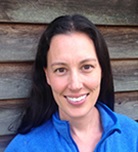 Meghan Halabisky is a research scientist at the University of Washington Remote Sensing and Geospatial Analysis Lab (RSGAL). Her interests lie in understanding ecosystem dynamics and landscape change through the development and application of high-resolution remote sensing tools. She completed her PhD at the University of Washington, where she worked to characterize the response of wetland ecosystems to historic and future climate by reconstructing surface water hydrographs for thousands of wetlands in Washington State and using a combination of aerial and satellite imagery. Meghan has a background in conservation management, having previously worked as an operations planner for the Oahu Invasive Species Committee. She has a concurrent master’s – MS/MPA from the Evans School of Public Affairs at the University of Washington.
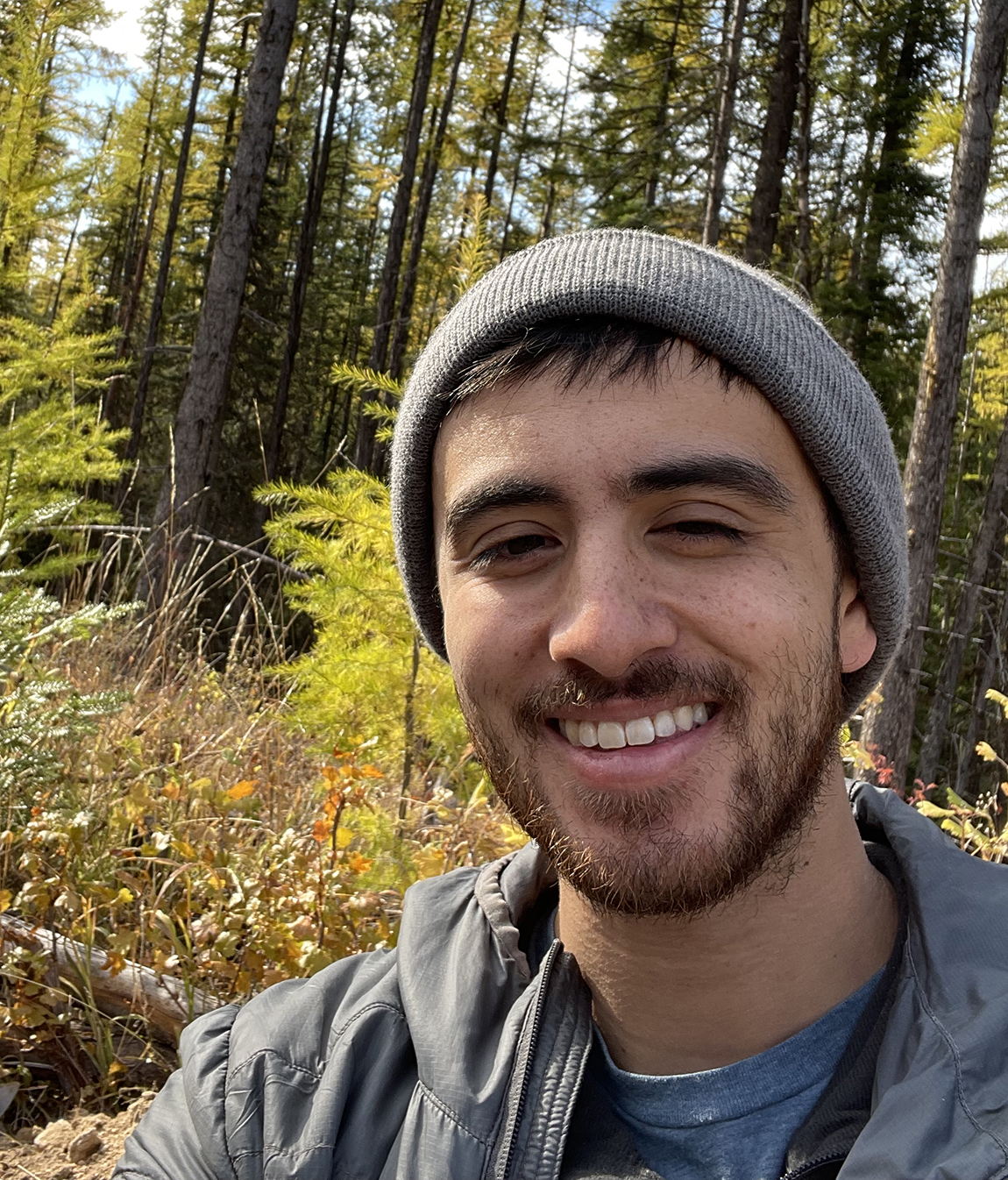 Anthony Stewart is a PhD student at the University of Washington. He uses remote sensing to map, characterize, and model wetlands and their soil carbon stocks. Particularly, he is interested in small forested wetlands and their role in the greater landscape.
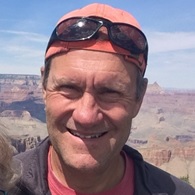 Andy Robertson is currently Executive Director of GeoSpatial Services at Saint Mary’s University of Minnesota. In this role, Andy is responsible for oversight and management of all GeoSpatial Services projects, activities and staff. GeoSpatial Services is engaged in a wide variety of projects across the Lower 48 and Alaska including: wetland inventory; National Hydrography Dataset updates; spatial data development; and natural resource condition assessments. GeoSpatial Services has been a key partner of the USFWS and has been working for over 18 years to update legacy National Wetland Inventory data across the nation. Andy is a steering committee member for the NAWM Wetland Mapping Consortium, a NAWM Board Member and is past-chair of the Alaska GeoSpatial Council Wetland Technical Working Group.
Please click only once on each video recording to view in this window.
Part 1: Introduction: Ian Grosfelt, National Association of Wetland Managers
Presenter: Meghan Halabisky, University of Washington Remote Sensing and Geospatial Analysis Lab
View Past Wetland Mapping Consortium Webinars
PDF List of Past Wetland Mapping Consortium Webinar Recordings
View Upcoming Wetland Mapping Consortium Webinars
The Wetland Mapping Consortium (WMC), founded in 2008, is an interdisciplinary group of wetland scientists and managers interested in mapping and monitoring wetlands with remotely sensed images and/or using the resultant products to best manage wetland resources.
For more information and/or to join our email list for notices about upcoming events, please contact Laura Burchill at laura@nawm.org or (207) 892-3399.
List of Wetland Mapping Consortium Webinar Recordings Here 
Please click on a year below to view past webinars.
| 2011 |
|
|||||||||||||||||||||||||||||||||||
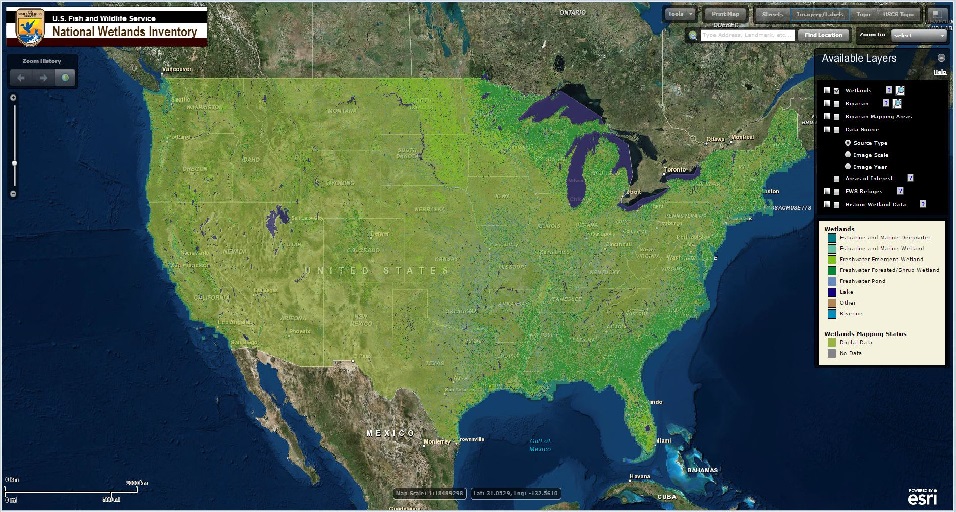 The Wetland Mapping Consortium (WMC), founded in 2008, is an interdisciplinary group of wetland scientists and managers interested in mapping and monitoring wetlands with remotely sensed images and/or using the resultant products to best manage wetland resources. The WMC Steering Committee organizes webinars on topics of interest to the group.
If you haven’t used Teams before or you just need a refresher, please view our guide prior to the webinar here.
For more information and/or to join our email list for notices about upcoming events, please contact Laura Burchill at laura@nawm.org or (207) 892-3399.
Past Wetland Mapping Consortium Webinars Here
List of Wetland Mapping Consortium Webinar Recordings Here

Please check back for future Wetland Mapping Consortium Webinars. Thank you.
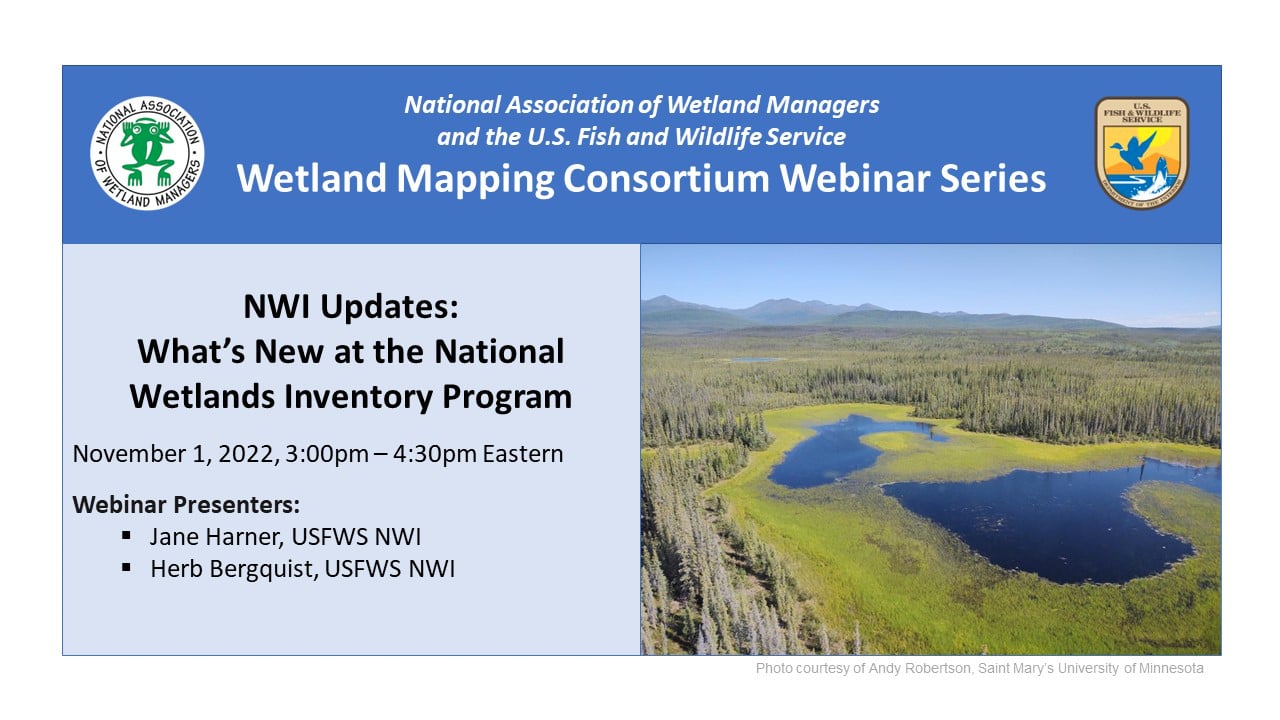
NWI Updates: What's New at the National Wetlands Inventory Program
Held Tuesday, November 1, 2022 - 3:00 pm - 4:30 pm Eastern
INTRODUCTION
- Portia Osborne, Project Manager, National Association of Wetland Managers [PRESENTATION PDF]
PRESENTERS [PRESENTATION PDF]
- Jane Harner, U.S. Fish and Wildlife Service National Wetlands Inventory
- Herb Bergquist, U.S. Fish and Wildlife Service National Wetlands Inventory
ABSTRACT
This webinar highlighted what's new at the National Wetlands Inventory Program. This presentation featured important NWI updates for anyone using or producing NWI wetlands data. The presenters provided background on NWI's renewed commitment to working with the USGS NHD/3DEP program in an effort to bring these datasets closer together. In addition, they provided details on new guidance documents, information on mapping wetlands to the Federal standard, introduce a new linear data layer option for those interested in mapping beyond the standard, showcase new and improved QAQC tools, and report on the status of mapping in the U.S. The NWI Program introduced new staff members and provide information on how to best communicate with the Program and request support!
BIOS
 Jane Harner joined the USFWS National Wetlands Inventory Program in 2007 as a GIS Analyst and works at the NWI Data Center located in Madison, Wisconsin. In her current role as Database Administrator, she maintains the National Wetlands Data Layer, incorporating new data updates and preparing data to be posted biannually to the Wetlands Mapper. Jane also assists with project coordination, tracking active mapping projects and facilitating new project initiation. Additionally, Jane is engaged in outreach for the NWI Program, which includes coordinating American Wetlands Month communications and updating website content.
 Herb Bergquist is USFWS National Wetlands Inventory Field Operations Team Lead and oversees NWI Program field operations, supervising regional wetland coordinators throughout the lower 48 states. His position includes project development and mapping management; Quality Control of wetlands data; coordination and communication with partners, cooperators, and contractors; and taking a leadership role in Program visioning development. Herb started working with the USFWS in 1993 as a field technician for the Northeast Loon study and the Environmental Monitoring and Assessment Program (EMAP). After a short stint with the State of New Hampshire Environmental Services program, he returned to USFWS and worked in various capacities for the Northeast Region Ecological Services Division focusing on wetlands, GIS mapping/analysis, and database management. Herb developed and produced numerous wetland functional assessments under Ralph Tiner (NE Regional Wetlands Coordinator) throughout the northeast region during that tenure.
Please click only once on each video recording to view in this window.
Part 1: Introduction: Portia Osborne, Project Manager, NAWM
Presenters: Herb Bergquist, U.S. Fish and Wildlife Service National Wetlands Inventory and Jane Harner, U.S. Fish and Wildlife Service National Wetlands Inventory
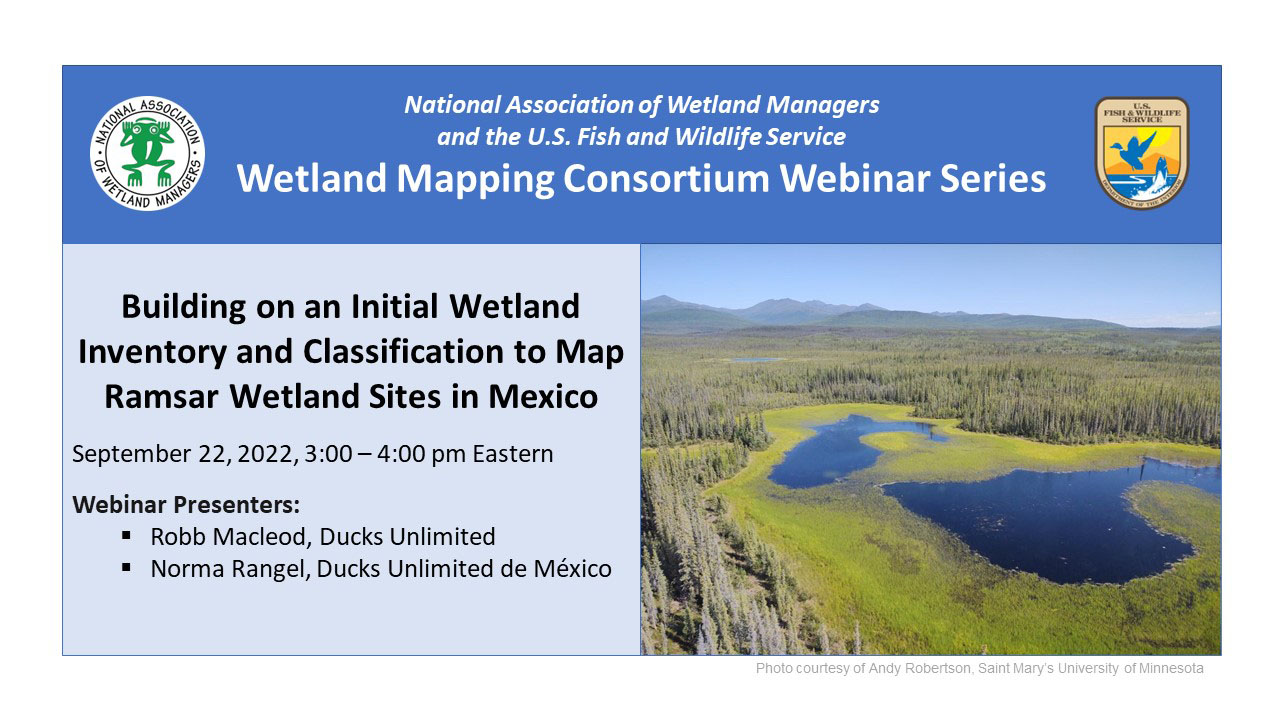
Building on an Initial Wetland Inventory and Classification to Map Ramsar Wetland Sites in Mexico
Held Thursday, September 22, 2022 - 3:00 pm - 4:00 pm Eastern
INTRODUCTION
- Portia Osborne, Project Manager, National Association of Wetland Managers [PRESENTATION PDF]
PRESENTERS
- Robb Macleod, Ducks Unlimited [PRESENTATION PDF]
- Norma Rangel, Ducks Unlimited de México [PRESENTATION PDF]
ABSTRACT
For 30 years, Ducks Unlimited de México (DUMAC) has worked on projects aimed at generating information to classify and quantify the different wetland ecosystems in Mexico. In 1991, DUMAC started the Wetlands Inventory and Classification project in Mexico, which was the first initiative in the country to characterize and quantify the wetlands of Mexico in a homogeneous way with a classification scheme. The objective of this initiative was to generate basic information that would support decision-making to achieve long-term conservation for the benefit of waterfowl and other wildlife. DUMAC, as a leading institution in wetlands mapping in Mexico, is currently working with the National Water Commission (CONAGUA) in the development of a wetlands inventory in northern Mexico (1:50,000) and since 2020 it has been working with the DOI for the mapping of Ramsar Sites in Mexico in coordination with the National Commission of Natural Protected Areas (CONANP).
BIOS
Robb Macleod is the National GIS Coordinator for Ducks Unlimited. He has been working for Ducks Unlimited in the GIS and Remote Sensing field for over 25 years. His current duties include coordinating all of the geospatial activities for Ducks Unlimited. Robb has been active in mapping wetlands in the Great Lakes for over 19 years with previous experience mapping wetlands and land cover in Alaska.
 Norma Rangel is a geographer from the University of San Luis Potosí (UASLP) and has a Master’s in Environmental Management from El Colegio de la Frontera Norte (El COLEF). She has worked in academic institutions such as the UASLP and El COLEF, as well as in government institutions such as the National Institute of Statistics and Geography (INEGI). In 2017 she joined Ducks Unlimited de México (DUMAC) as Project Supervisor and since 2020 is the Coordinator of Remote Sensing and GIS Department.
Please click only once on each video recording to view in this window.
Part 1: Introduction: Portia Osborne, Project Manager, NAWM
Presenter: Robb Macleod, Ducks Unlimited and
Norma Rangel, Ducks Unlimited de México
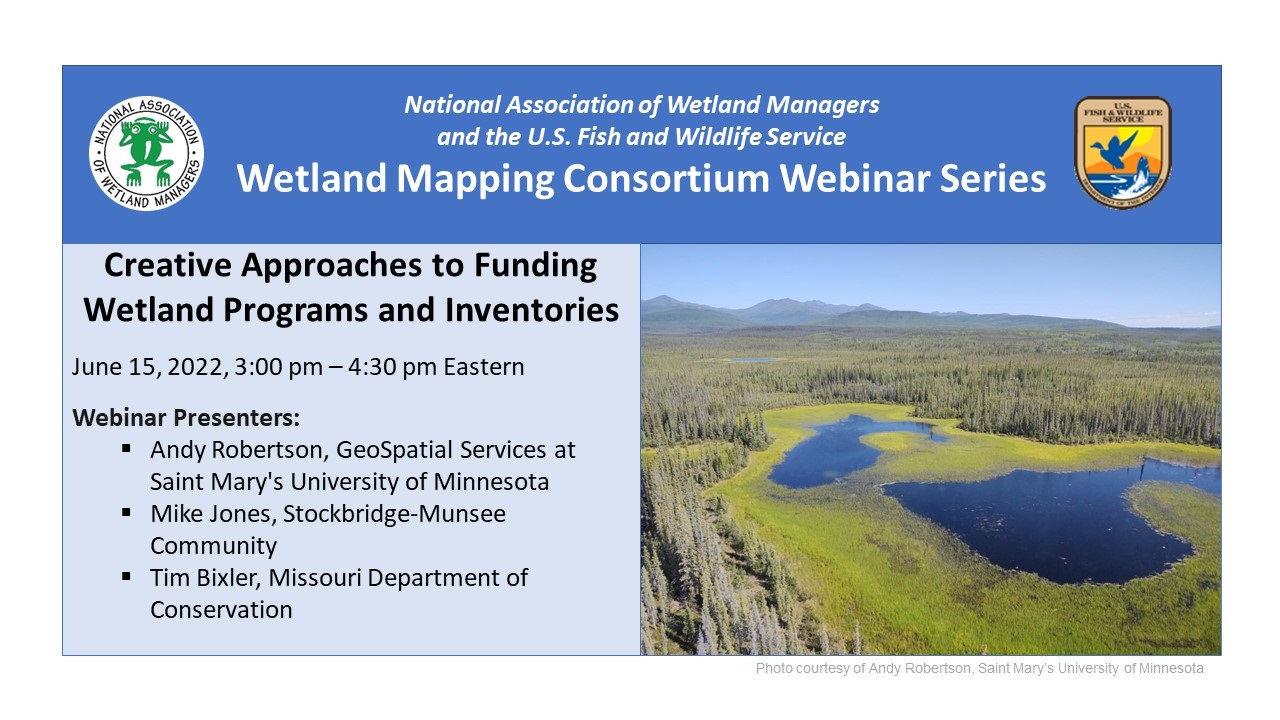
Creative Approaches to Funding Wetland Programs and Inventories
Held Wednesday, June 15, 2022 - 3-4:30 pm Eastern
INTRODUCTION
- Portia Osborne, Project Manager, National Association of Wetland Managers [PRESENTATION PDF]
PRESENTERS
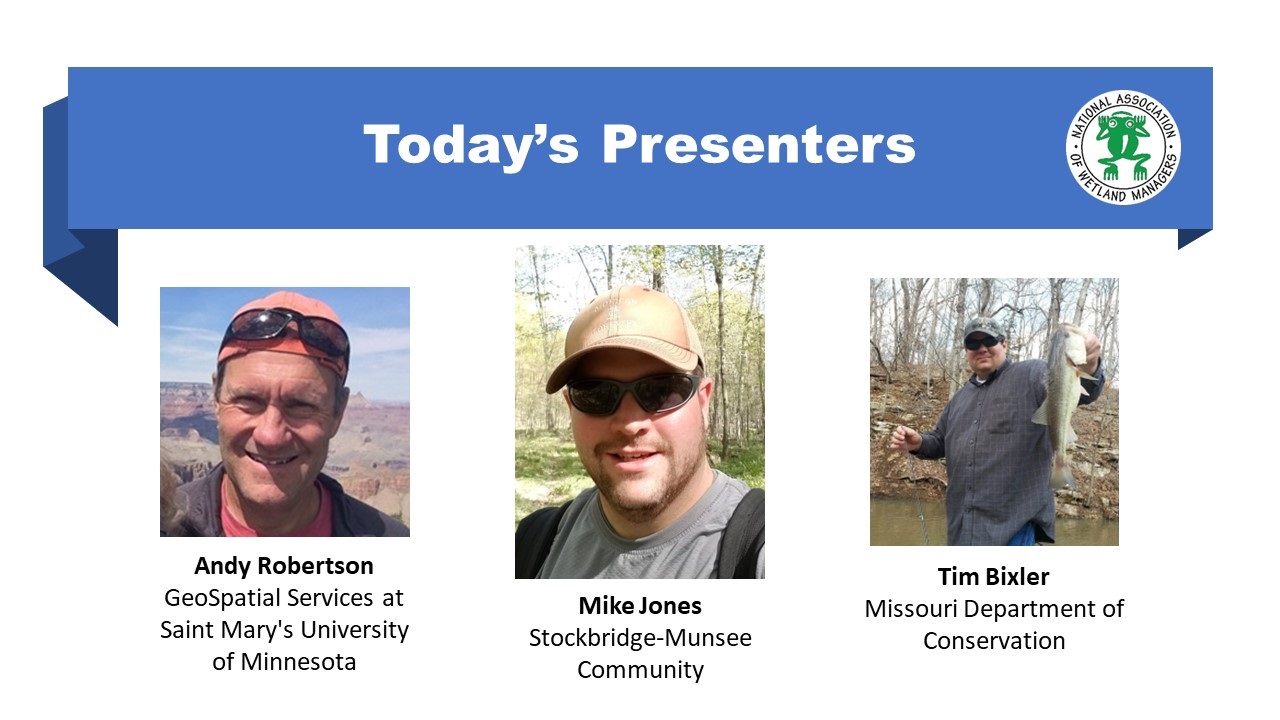
- Andy Robertson, GeoSpatial Services at Saint Mary's University of Minnesota [PRESENTATION PDF]
- Mike Jones, Stockbridge-Munsee Community [PRESENTATION PDF]
- Tim Bixler, Missouri Department of Conservation [PRESENTATION PDF]
ABSTRACTS
Andy Robertson
Creative Approaches to Funding Wetland Programs and Inventories
Creative Approaches to Funding Wetland Programs and Inventories
Saint Mary’s University of Minnesota GeoSpatial Services (GSS) has been working to help build wetland data and programs with a variety of federal and state partners for over 20 years. Recognizing that funding for wetland management can often be challenging to obtain, GSS and our partners have employed a variety of strategies to generate initial and ongoing program funding including:
- Leveraging techniques and technologies – better, faster, cheaper
- Creating linkages to other funded programs (e.g. water quality management)
- Adding value to wetland mapping databases (e.g. hydrogeomorphic attributes, wetland functional assessment)
- Mixing funding sources and levels to share the cost burden
- Development of stakeholder support through education and outreach
This presentation focused on the experiences of two decades of creativity around wetland inventory and program development. Approaches, funding sources, agency involvement and data enhancements were reviewed using specific examples from successful projects.
Mike Jones
The Stockbridge-Munsee Community’s Approach to Funding and Sustaining a Tribal Wetland Program
The Stockbridge-Munsee Community’s Approach to Funding and Sustaining a Tribal Wetland Program
Sustaining a formal wetland program is a major challenge for tribes throughout the country. Tribes often rely on EPA Wetland Program Development Grants (WPDGs), but those have limitations for routine work that is necessary to maintain a program. As a result, many tribes have seen their wetland programs disappear due to lack of long-term funding and staffing. The Stockbridge-Munsee Community (SMC) has been able to sustain their wetland program since 2012 by diversifying funding sources and relying on partnerships within and outside of the Tribe. While WPDGs are still a major funding source, SMC has secured a wide variety of other grant and cost-share funds to cover program activities that are not allowable under WPDGs. SMC also has emphasized building Tribal capacity to improve program efficiency and reduce costs. While each Tribe is unique, some of these approaches can be implemented by other tribes to help sustain their wetland programs.
Tim Bixler
Missouri’s effort to form partnerships and secure funding to update the National Hydrography Dataset and National Wetland Inventory.
Missouri’s effort to form partnerships and secure funding to update the National Hydrography Dataset and National Wetland Inventory.
The current geospatial data for Missouri’s NHD and NWI was largely developed in the 1980’s. Despite their age, inherent inaccuracy, and coarse resolution, both are still foundational GIS layers used on a wide range of applications for a host of federal, state, county, and municipal agencies, as well as by the private sector and individual citizens. Unfortunately, these datasets must be used with broad caveats and limitations. Missouri’s population, landscape, and climate patterns have and are continuing to change, putting lives, properties, infrastructure, and natural resources at risk to natural hazards like extreme flooding. Making informed decisions with difficult trade-offs in a complex world relies on accurate and up-to-date information. Technical advancements in GIS data and processing make updating these two spatial workhorses an attractive venture and would drastically enhance their utility to a host of stakeholders. Communicating across agencies to generate support for such an endeavor takes time, information, and flexibility both within an organization and among partners.
BIOS
Andy Robertson is the Executive Director of GeoSpatial Services at Saint Mary’s University of Minnesota. In this role, he is responsible for oversight and management of all GeoSpatial Services projects, activities and staff. GeoSpatial Services is engaged in a wide variety of projects across the Lower 48 and Alaska including wetland inventory; National Hydrography Dataset updates; spatial data development; and, natural resource condition assessments. Andy has a diverse background in spatial information systems, watershed planning, wetland inventory, forest management, environmental impact assessment, desktop and server system support and database administration. He is a Registered Professional Forest Technologist (Alberta, Canada) and has experience leading natural resource projects for both private sector companies and public agencies across Canada and the United States including the Department of Interior, United States Army Corp of Engineers, NOAA, and the Department of Agriculture. He is also a steering committee member for the Wetland Mapping Consortium and is co-chair of the Alaska GeoSpatial Council Wetland Technical Group. Andy has a Forest Technology Diploma from Sault College of Applied Technology in Ontario, Canada, a B.Sc. in Environmental Science from the University of Waterloo and has completed postgraduate work in forest management at the University of Toronto.
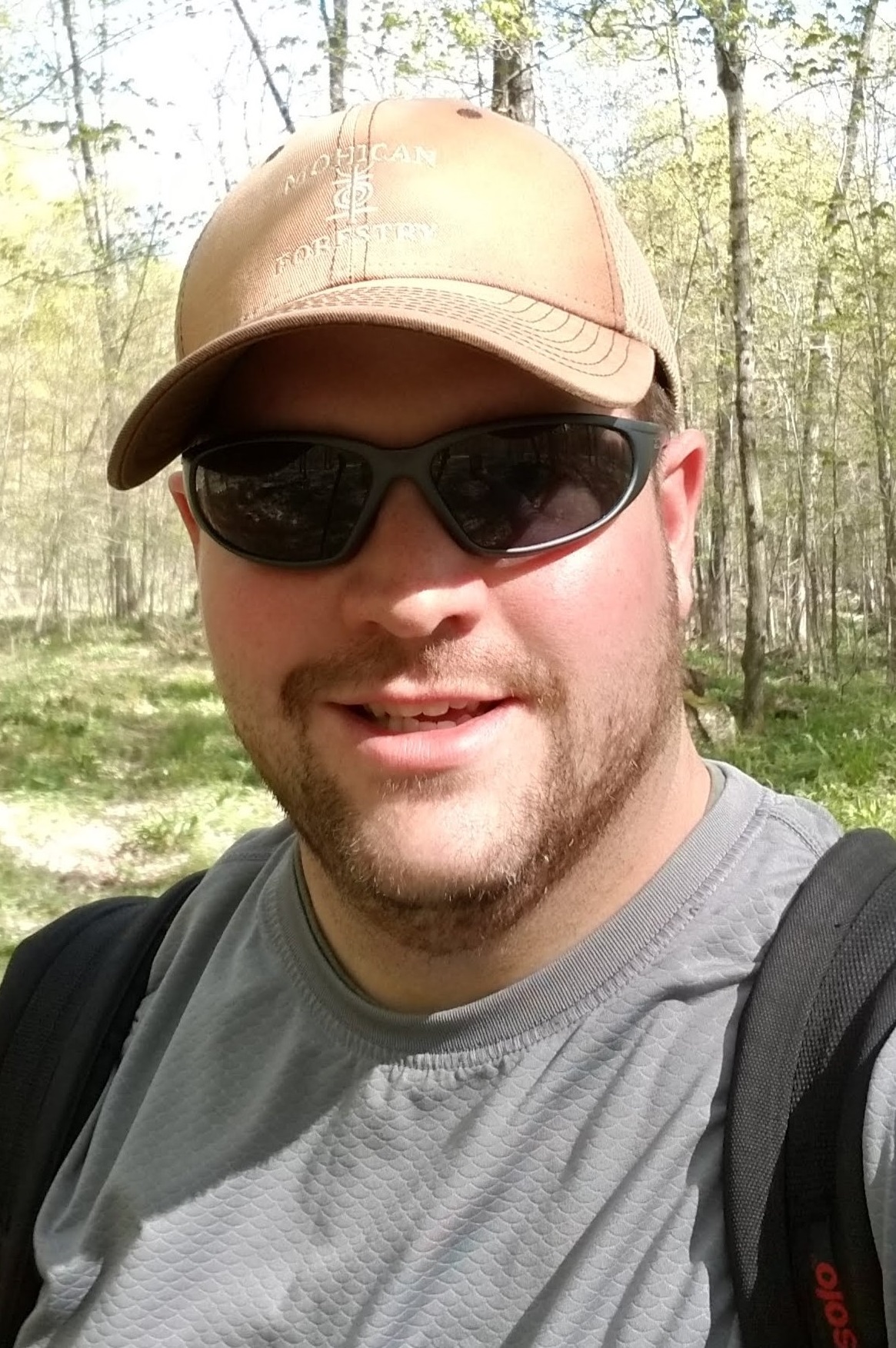
Mike Jones is the Wetland Specialist for the Stockbridge-Munsee Community, a Federally-recognized tribe in Northeast Wisconsin. For the last five years, he has managed the Tribe’s Wetland Program, which focuses on protecting, monitoring, and restoring wetlands on Tribal lands and within the greater watershed. Mike has a B.S. in Biology and Wildlife Ecology from the University of Wisconsin-Stevens Point, and an M.S. in Wildlife and Fisheries Resources from West Virginia University.
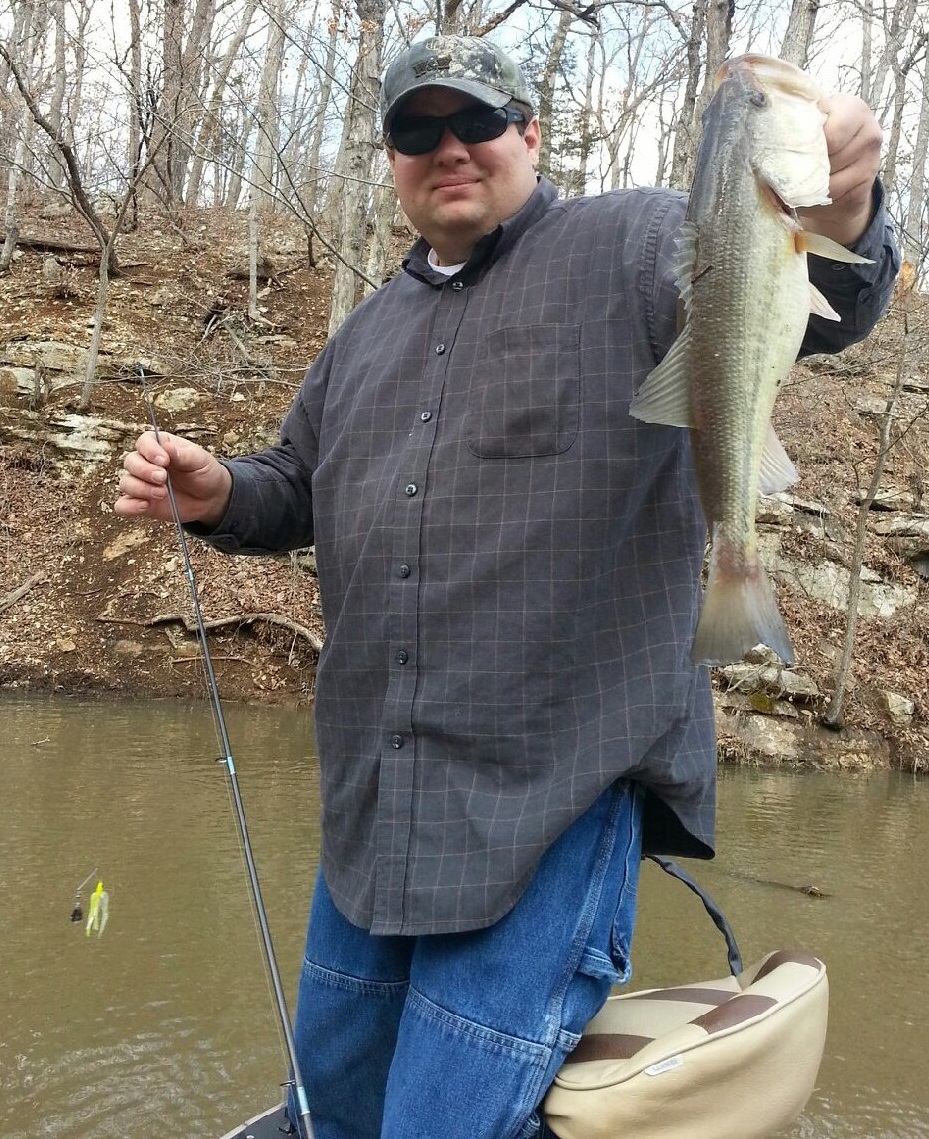 Tim Bixler is the IT Database & GIS Supervisor for the Missouri Department of Conservation (MDC), a state agency that manages the fish, forest, and wildlife of Missouri. In this role he manages the Department’s Geographic Information System (GIS) and SQL Server Environment. Tim represents MDC on the Missouri GIS Advisory Council (MGISAC) and currently serves as the Chair-Elect on the Council. Tim has 18 years of experience working with GIS in natural resource and conservation related agencies and enjoys managing data and applications that help people discover nature and make informed conservation related decisions. He holds a Bachelor of Science degree in Geography with a minor in Cartographic Sciences from Missouri State University and is GISP certified.
Please click only once on each video recording to view in this window.

Part 1: Introduction: Portia Osborne, Project Manager, NAWM
Presenter: Andy Robertson, GeoSpatial Services at Saint Mary's University of Minnesota
View Past Wetland Mapping Consortium Webinars
PDF List of Past Wetland Mapping Consortium Webinar Recordings
View Upcoming Wetland Mapping Consortium Webinars
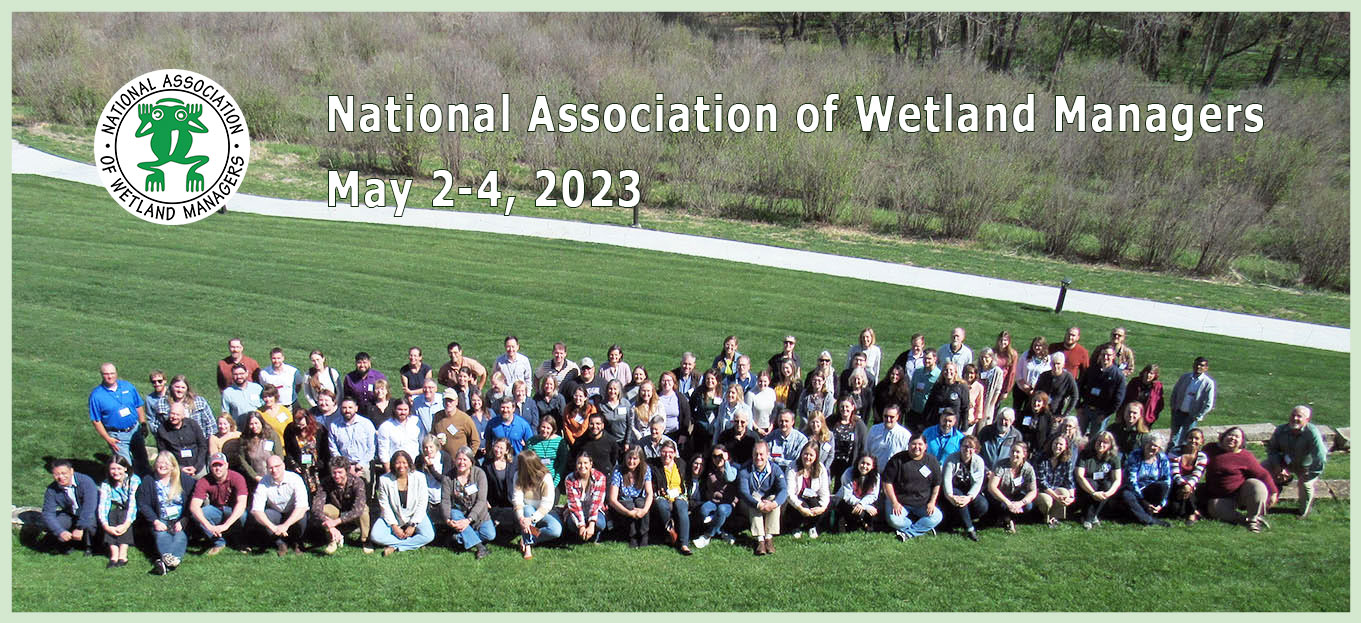
| GROUP PHOTO | ||||||
 |
| WELCOME | ||
 |
||
| Marla Stelk, Executive Director, NAWM | ||
 |
 |
|||||
|
Brandley Brandt, Senior Program Manager, |
Tim McCoy, Director, Nebraska Game and Parks Commission |
 |
|||
|
Mark Biddle, Chair, NAWM Board of Directors |
| SESSIONS | |||
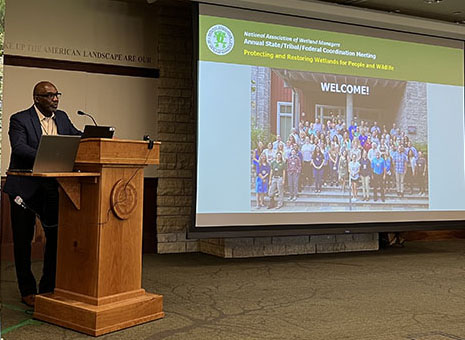 |
|||
|
Brian Frazer, Director, Office of Wetlands, Oceans, and Watersheds, U.S. EPA |
 |
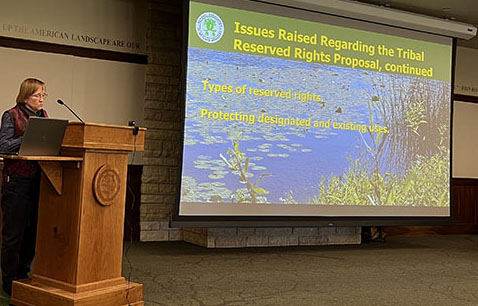 |
|||||
|
Kathy Hurld, U.S. EPA |
Donna Downing, NAWM |
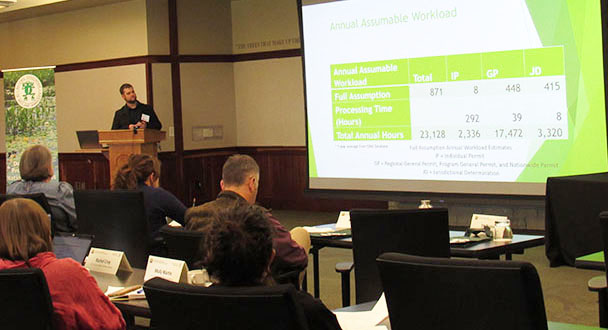 |
 |
||||
| Dane Pauley, Nebraska Dept. of Environment & Energy | Ian Grosfelt, NAWM | ||||
 |
||
| Marla Stelk, NAWM | ||
 |
||
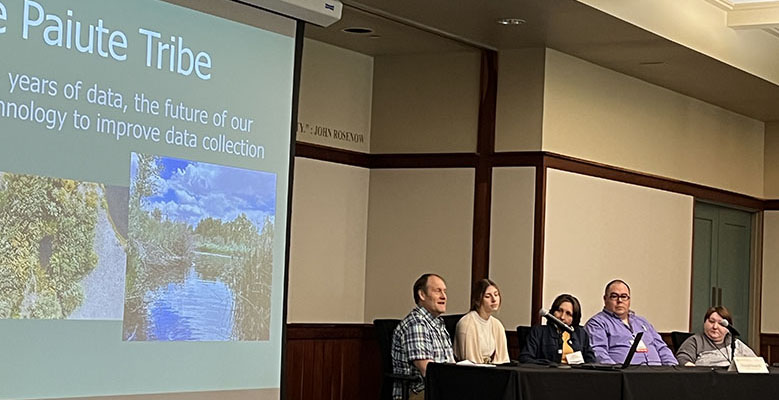
| Panel: Working with Tribes to Build Wetland Program Capacity and a Nationwide Framework for Advancement |
||
|
Moderator: Jeff Lapp, NAWM |
 |
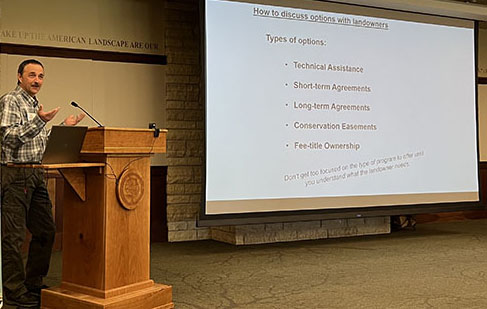 |
||||||
| Ted LaGrange, Nebraska Game and Parks Commission | Ritch Nelson, NRCS | ||||||
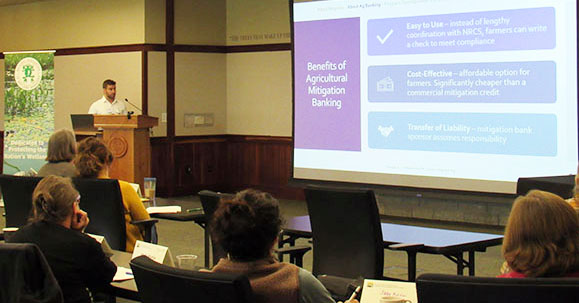 |
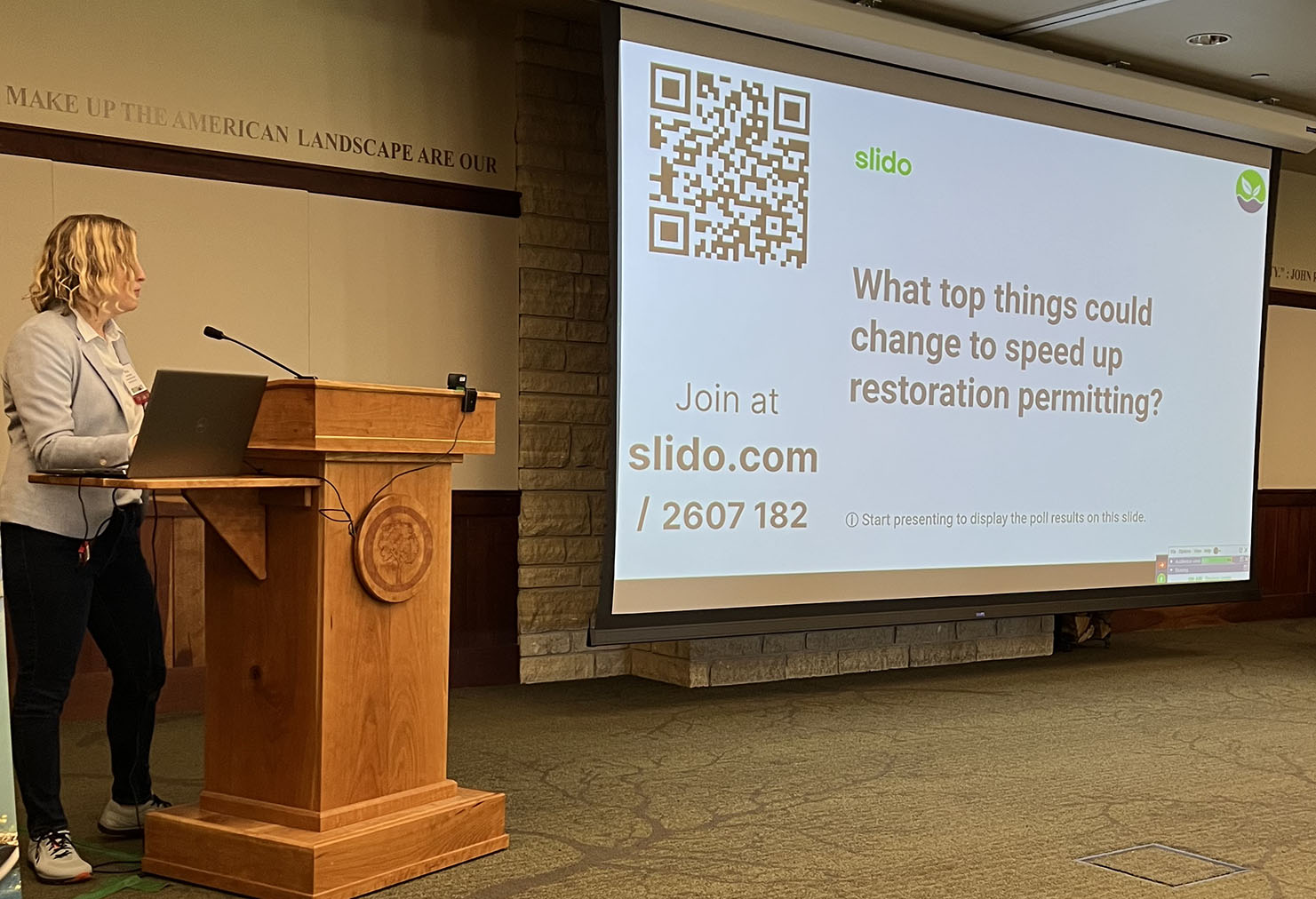 |
|||||
| Mike Glester, Magnolia Land Partners | Becca Madsen, Environmental Policy Innovation Center | |||||
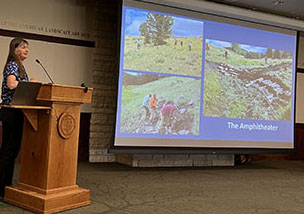 |
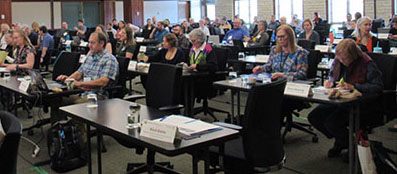 Attendees Attendees |
|||||
| Karen Menetrey, Rio Grande Return | ||||||
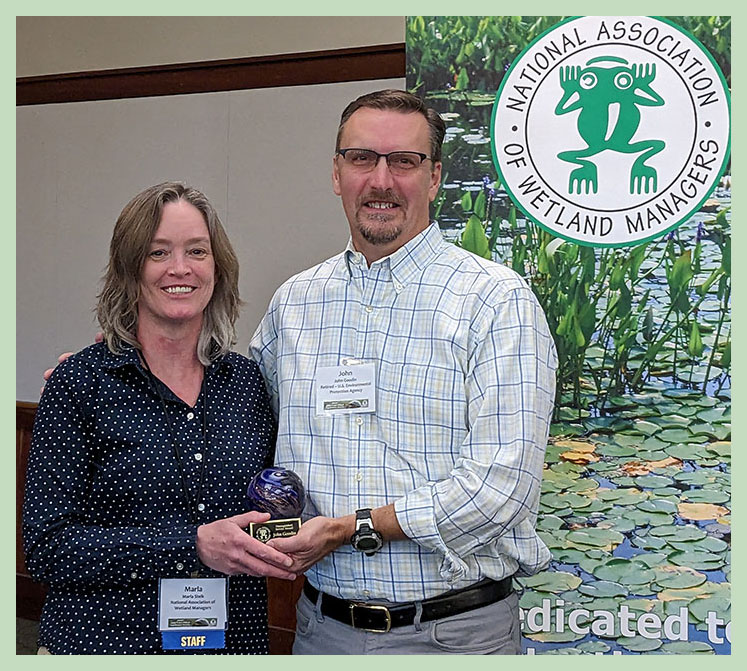
| DISTINGUISHED SERVICE AWARD | ||||||
 |
||||||
| John Goodin Receives the Distinguished Service Award from Marla Stelk, NAWM |
| SESSIONS | ||
 |
||
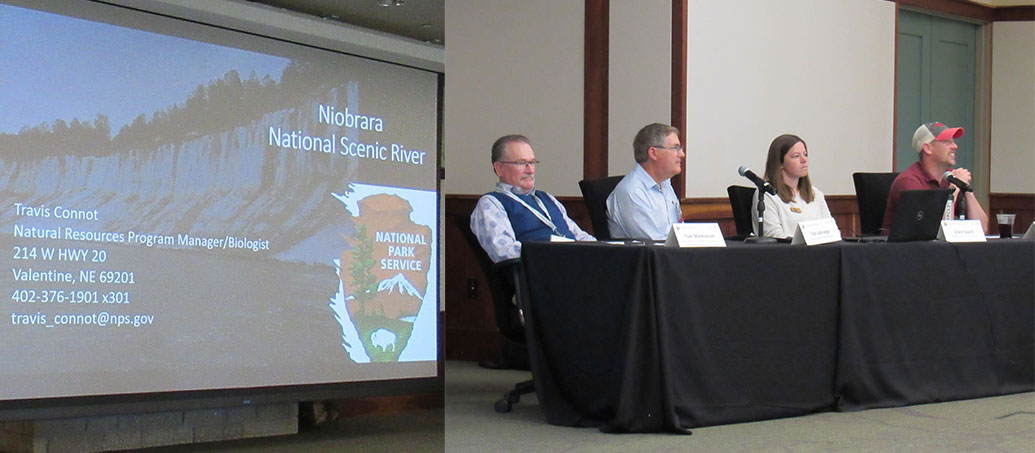
| Panel: Wetlands and Recreation | ||
|
Tom Malmstrom, City of Lincoln Parks and Recreation Department; |
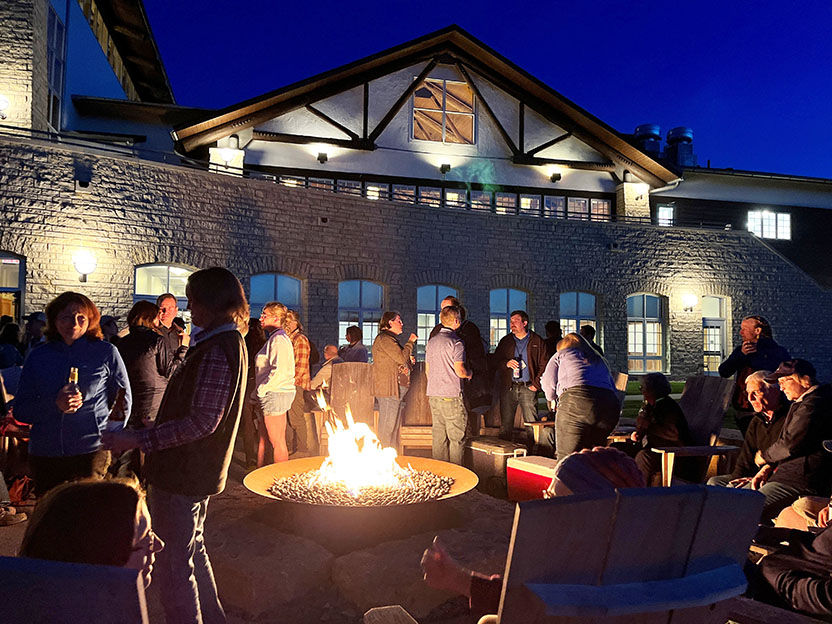
| BONFIRE | ||
 |
| SESSIONS | ||
 |
||
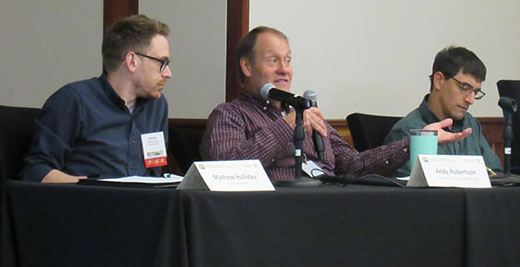
| Wetland Mapping Consortium Panel: Automation and Compliance with FGDC and NWI Standards | ||
|
Moderator, Mark Biddle, Delaware Dept. of Natural Resources & Environmental Control. |
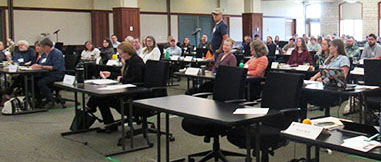 Attendees Attendees |
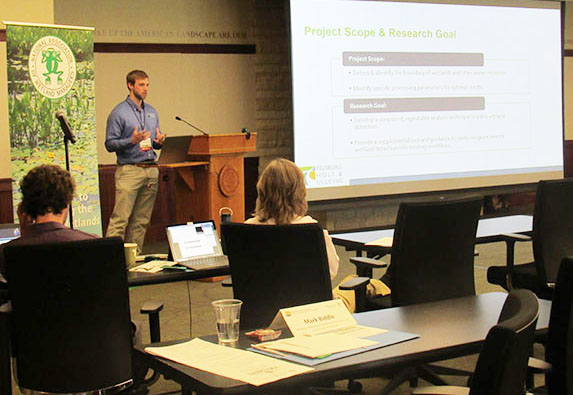 |
|||||
| Blake Walter, Feisburg Holt & Ullevig | ||||||
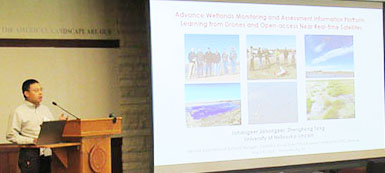 Zhenghong Tang, University of Nebraska-Lincoln Zhenghong Tang, University of Nebraska-Lincoln |
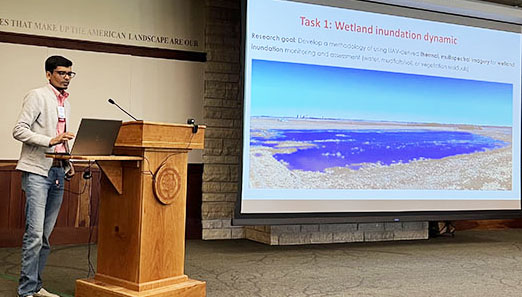 |
|||||
| Jahangeer Jahangeer, University of Nebraska-Lincoln | ||||||
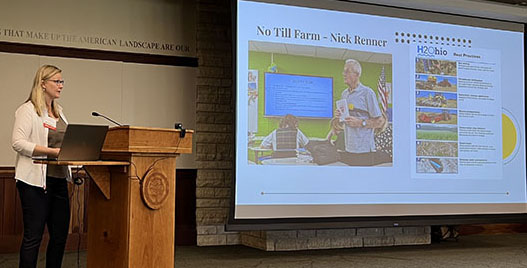 |
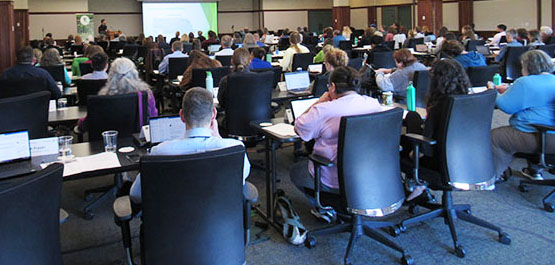 |
|||||
| Laura Manns, Ohio Wetlands Association | Attendees | |||||
| RAFFLE ITEMS | |||
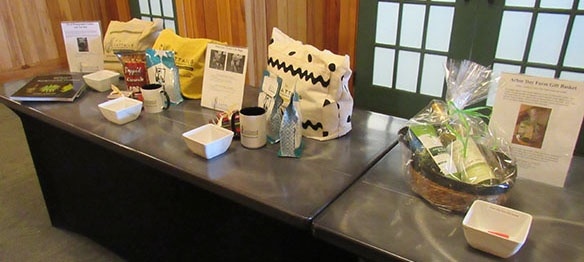 |
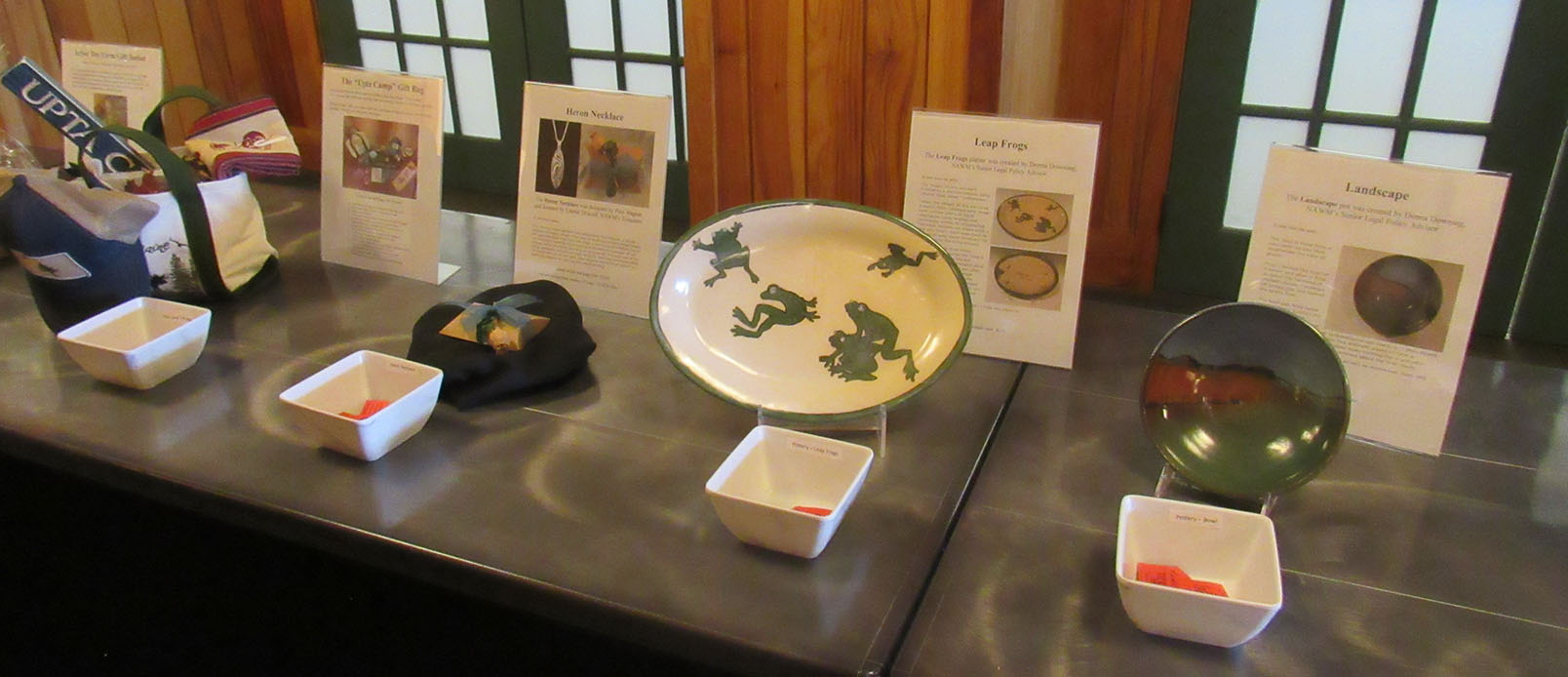 |
||
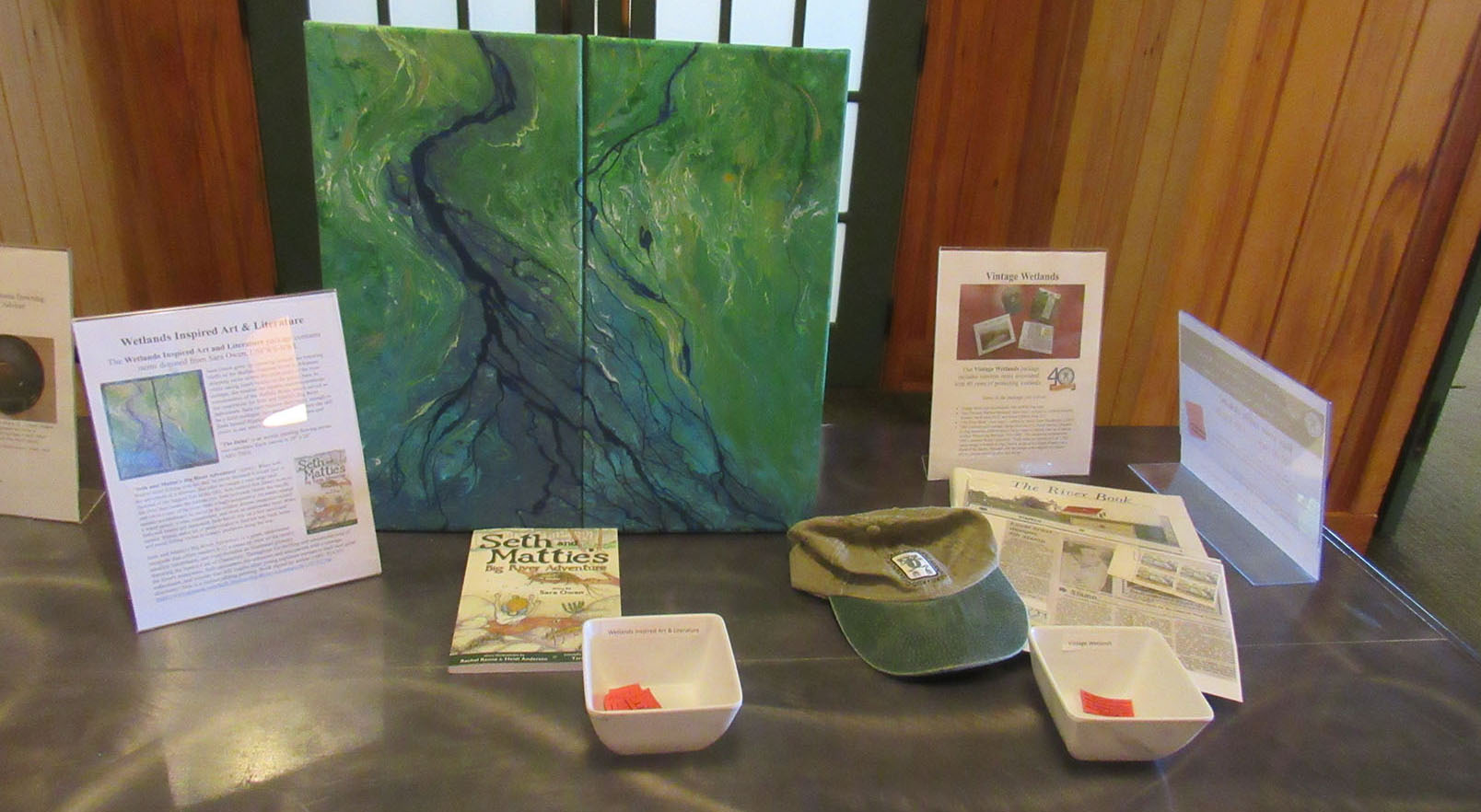 |
|||
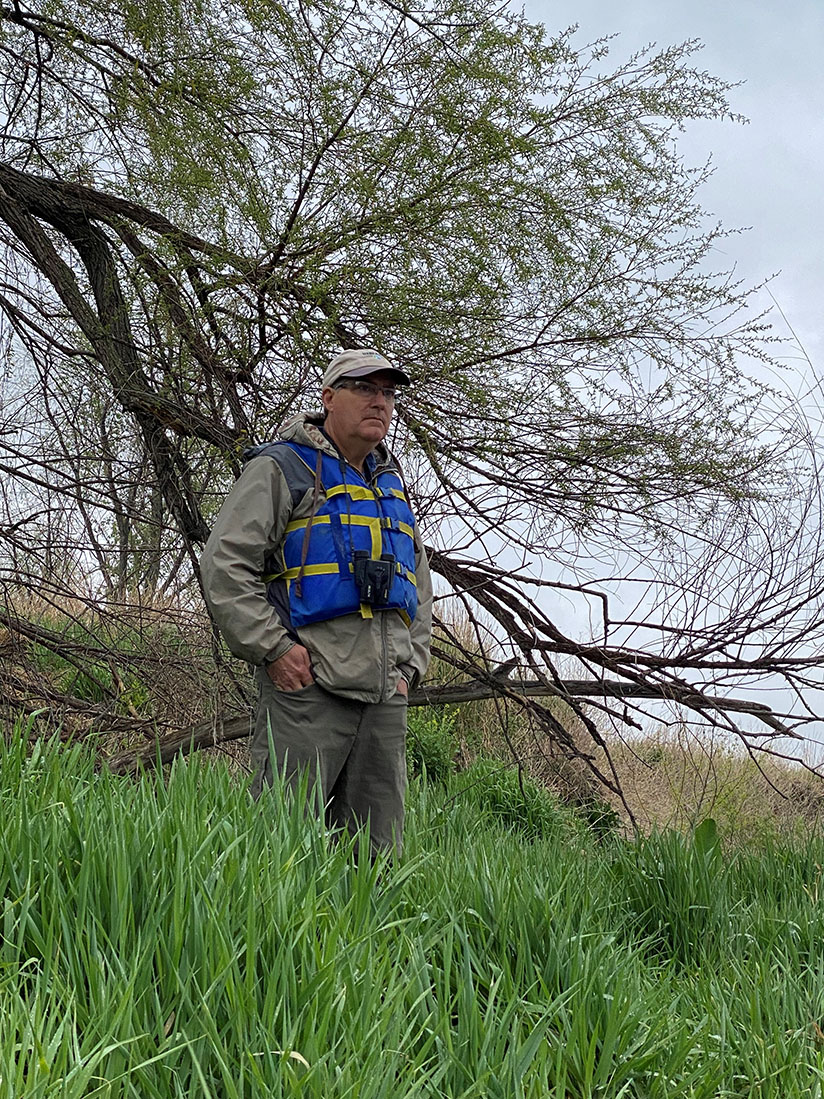
| FIELD TRIP MISSOURI RIVER |
|||
 |
|||
| Field Trip Host: Ted Lagrange, Nebraska Game and Parks Commission |
 |
||
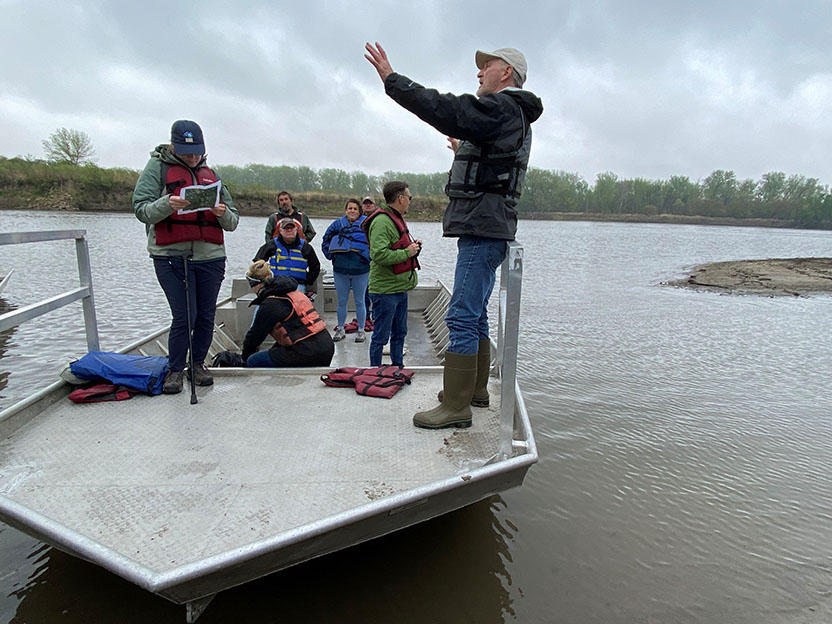
| Hearing about the restoration along the Missouri River | ||
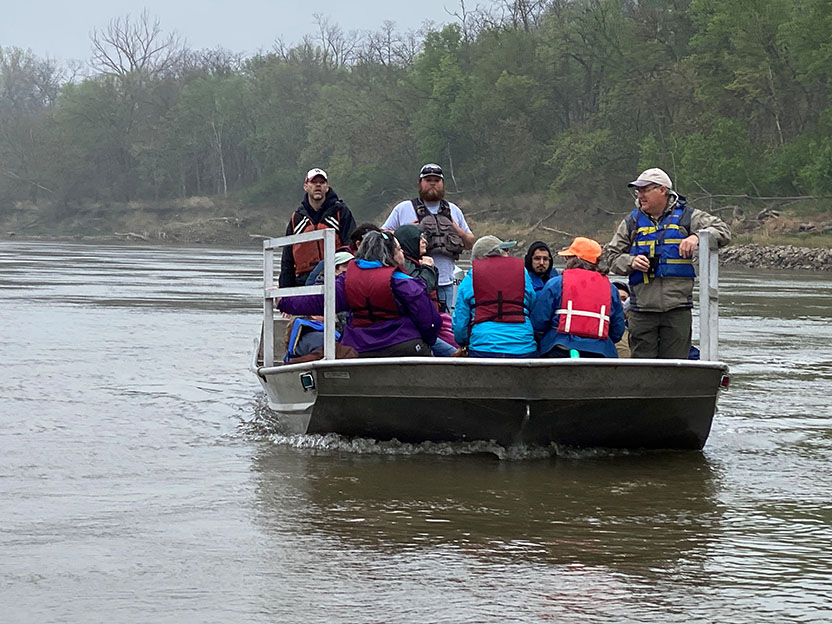 |
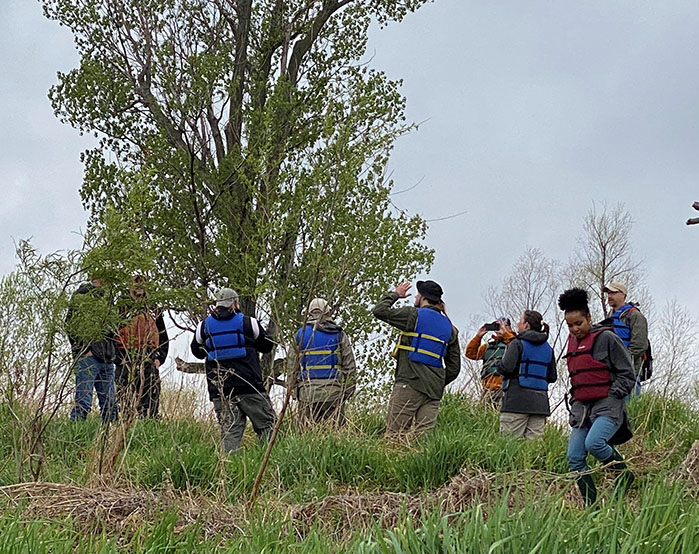 |
||
| Boat for field triop on the Missouri River | Field trip along the Missouri River | ||
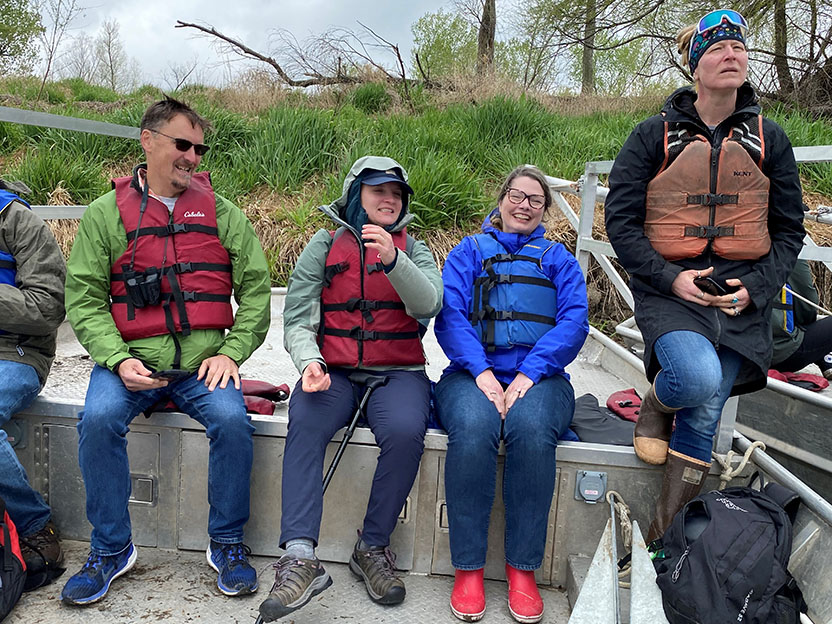 |
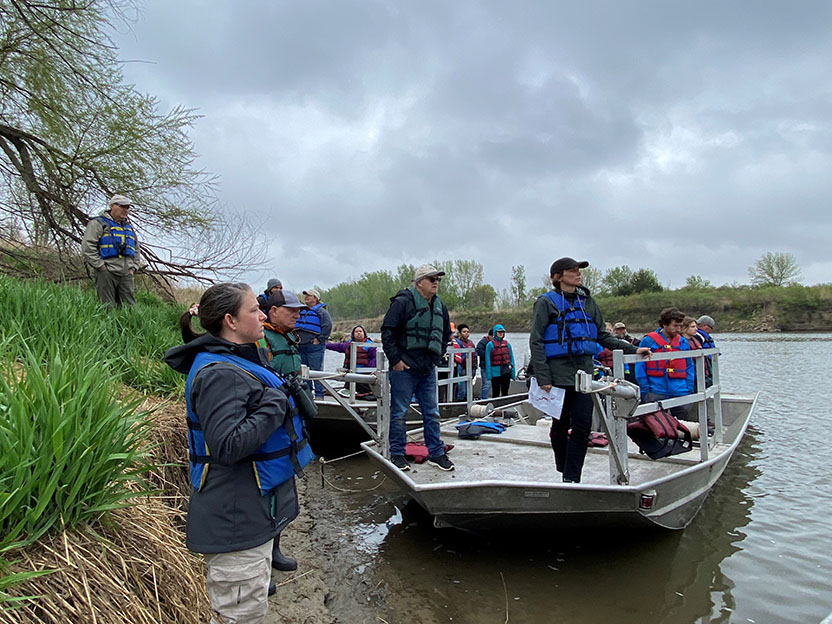 |
||
| Field trip fun! | Field trip along the Missouri River |
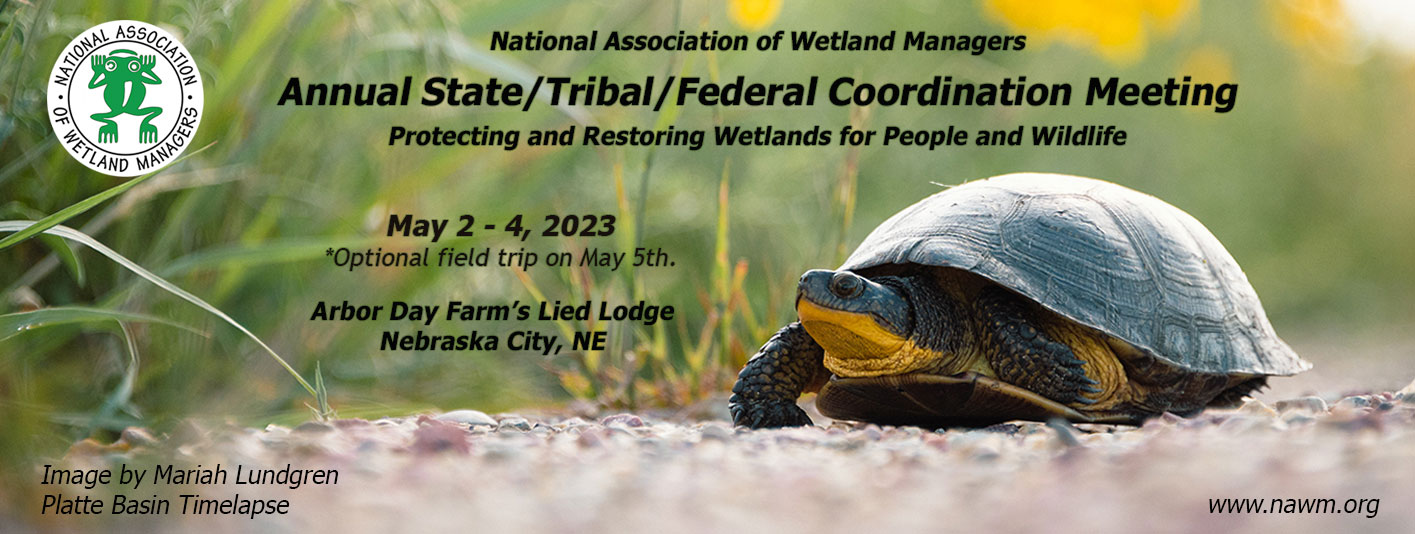
Information on the Annual State/Tribal/Federal Coordination Meeting can be found here.
MEETING MATERIALS
|
Agenda with Presentations - (Posted 6/13/23) NAWM Resources |
Thank you to our Sponsors Kingfisher Sponsors |
||||||||||||||||||||||||||||||||||||||||||||||||||||||||||||||||||||||||||
 |
 |
 |
|||||||||||||||||||||||||||||||||||||||||||||||||||||||||||||||||||||||||
|
Speaker Materials Notice of Intent to Update the Upland Erosion Control, Revegetation and Maintenance Plan and the Wetland & Waterbody Construction and Mitigation Procedures and Request for Comments. Comment period closes, May 9, 2023. Submitted by Alison Sounders
|
||||||||||||||||||||||||||||||||||||||||||||||||||||||||||||||||||||||||||
|
Strategies and an Action Plan for Protecting and Restoring Wetland and Floodplain Functions (2023) Urban Wetlands Protection and Restoration Guide (2021) Wetland Restoration: Contemporary Issues & Lessons Learned (2017) ASWM Wetland Communications Case Studies Project Report (2017) Government Liability and Climate Change: Selected Issues for Wetland and Floodplain Managers (2016) |
||||||||||||||||||||||||||||||||||||||||||||||||||||||||||||||||||||||||||
|
|
||||||||||||||||||||||||||||||||||||||||||||||||||||||||||||||||||||||||||
Agenda
Marla Stelk, Executive Director
National Association of Wetland Managers
(207) 892-3399; marla@nawm.org
General Information
Laura Burchill, Office Manager
National Association of Wetland Managers
500 Washington Avenue, Suite 201, Portland, ME 04103
(207) 892-3399; Fax: (207) 894-7992; laura@nawm.org
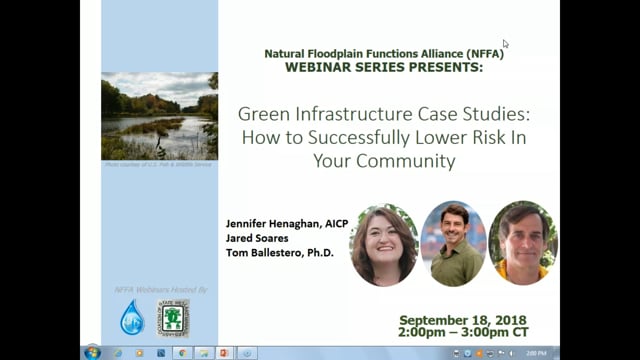
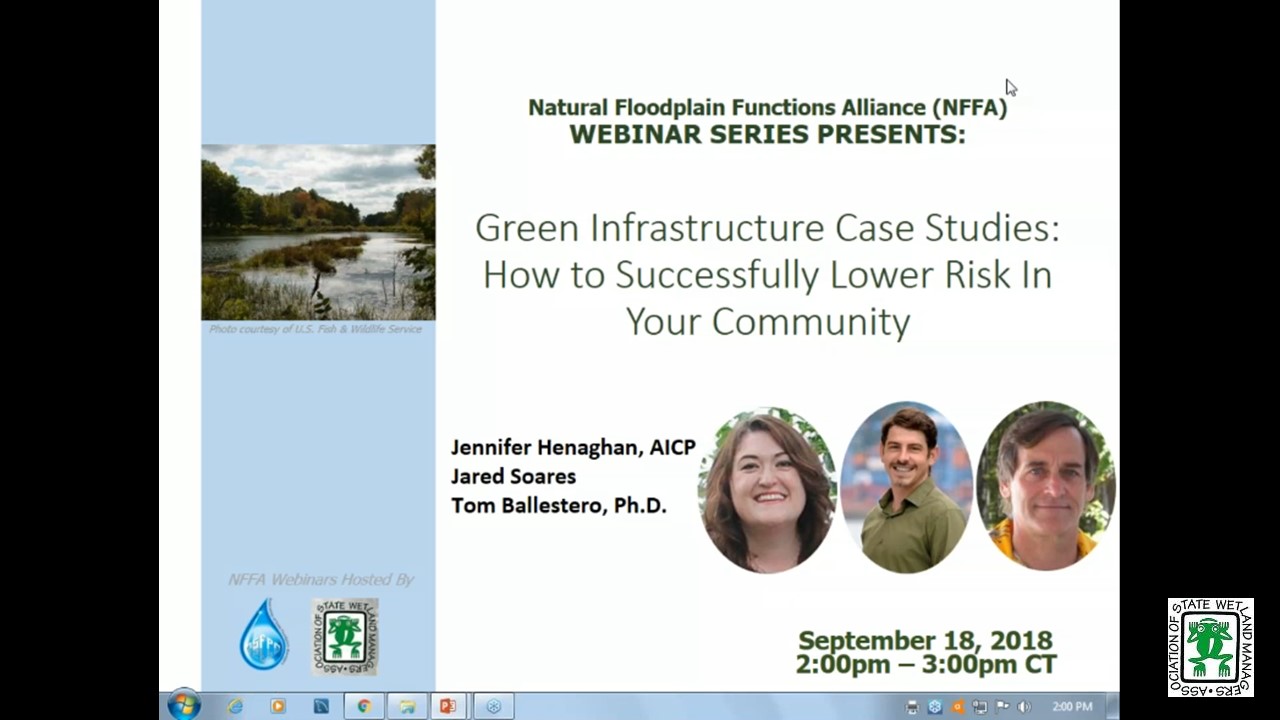
Green Infrastructure Case Studies: How to Successfully Lower Risk in Your Community
Held Tuesday, September 18, 2018 - 3:00 p.m. ET
HOST
Association of State Floodplain Managers
This presentation began with a federal updates by Maria Honeycutt, Ph.D., CFM, Coastal Hazards Specialist at NOAA and Jeanne Christie, Senior Policy Advisor at the Association of State Wetland Managers, followed by a brief Q&A period. This was followed by the updates with our featured webinar presentation entitled “Green Infrastructure Case Studies: How to Successfully Lower Risk in Your Community.” Speakers included: Jennifer Henaghan, AICP, Deputy Research Director and Manager of the Green Communities Center at the American Planning Association; Dr. Tom Ballestero, Associate Professor of Civil and Environmental Engineering at the University of New Hampshire (UNH) and Director of the UNH Stormwater Center; and Jared Soares, Research Analyst at Earth Economics. More information about the presentation can be found below.
PRESENTERS
- Jennifer Henaghan, AICP, , Deputy Research Director and Manager of the Green Communities Center at the American Planning Association
- Dr. Tom Ballestero, Associate Professor of Civil and Environmental Engineering, University of New Hampshire (UNH) and Director of the UNH Stormwater Center
- Jared Soares, Research Analyst, Earth Economics
ABSTRACT
During this webinar, our presenters broke down the anatomy of green infrastructure projects from the design process to cost-benefit analysis to community partnerships. Participants learned about green infrastructure projects for watershed restoration, stream restoration, and integration of stormwater green infrastructure into parks and park systems. The presentation also included a report on the highlights from the September U.S. Army Corps of Engineers Silver Jackets national support team meeting including brief overviews of Federal agency green infrastructure programs.
Please click only once on each video recording to view in this window.
Green Infrastructure Case Studies: How to Successfully Lower Risk in Your Communit
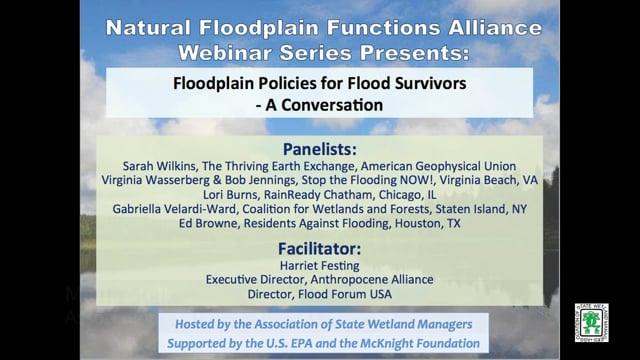
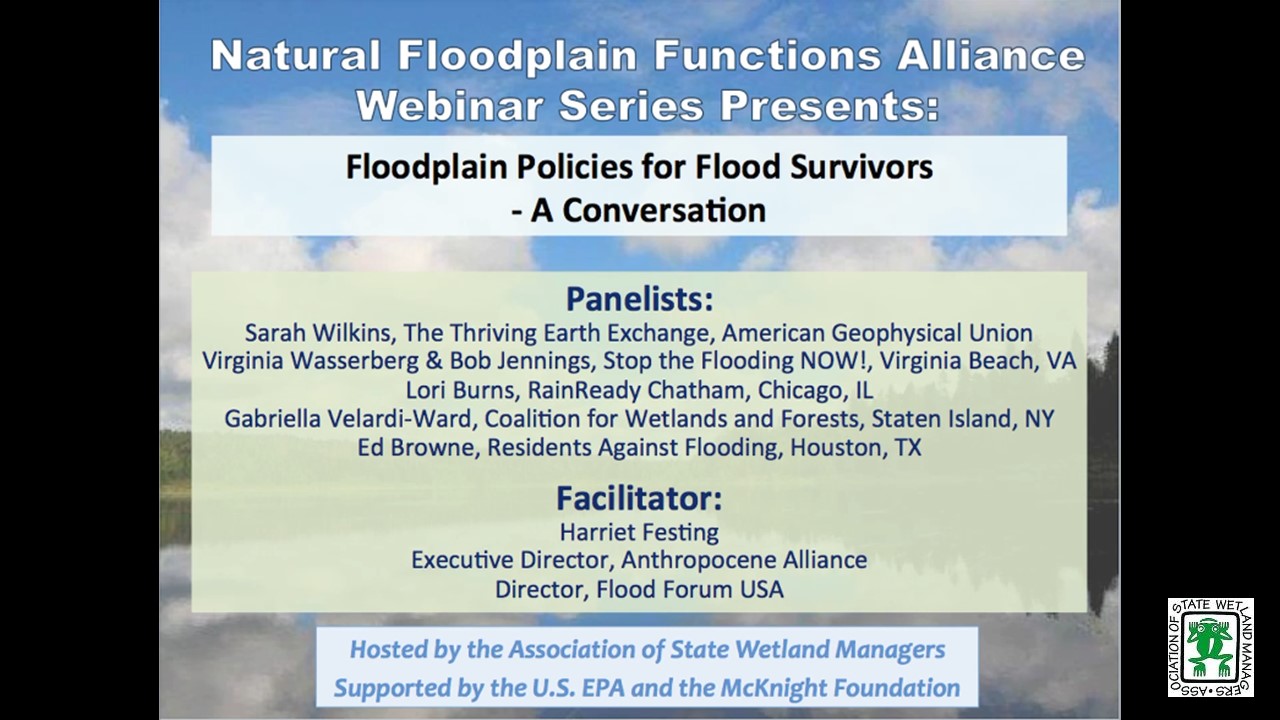
Floodplain Policies for Flood Survivors - A Conversation
Held Tuesday, July 10, 2018 - 3:00 p.m. ET
INTRODUCTION
- Marla Stelk, Policy Analyst, Association of State Wetland Managers [PRESENTATION PDF]
FACILITATOR
- Harriet Festing, Executive Director of Anthropocene Alliance and Director of Flood Forum [PRESENTATION PDF]
PRESENTER
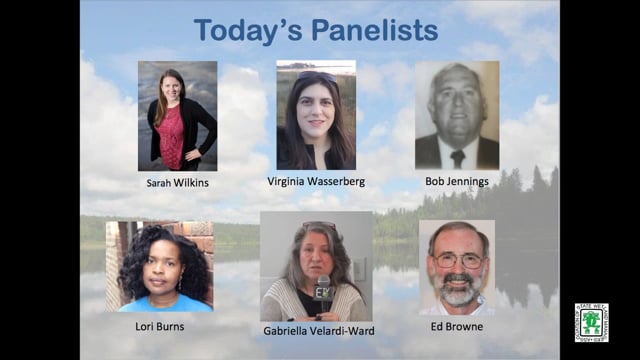
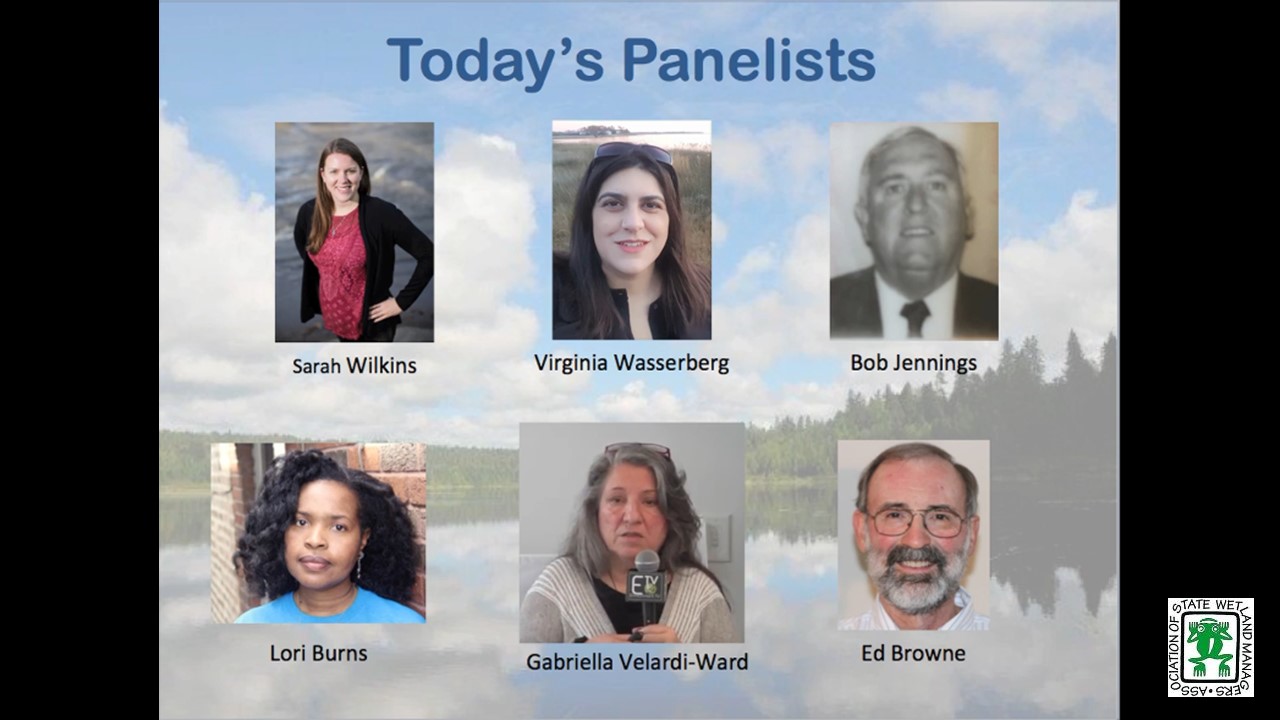
- Sarah Wilkins, Thriving Earth Exchange, American Geophysical Union
- Virginia Wasserberg, Stop the Flooding NOW!, Virginia Beach, VA
- Bob Jennings, Stop the Flooding Now, Virginia Beach, VA
- Lori Burns, RainReady Chatham, Chicago, IL
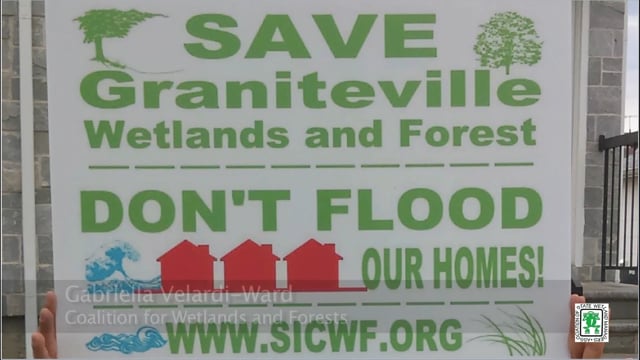
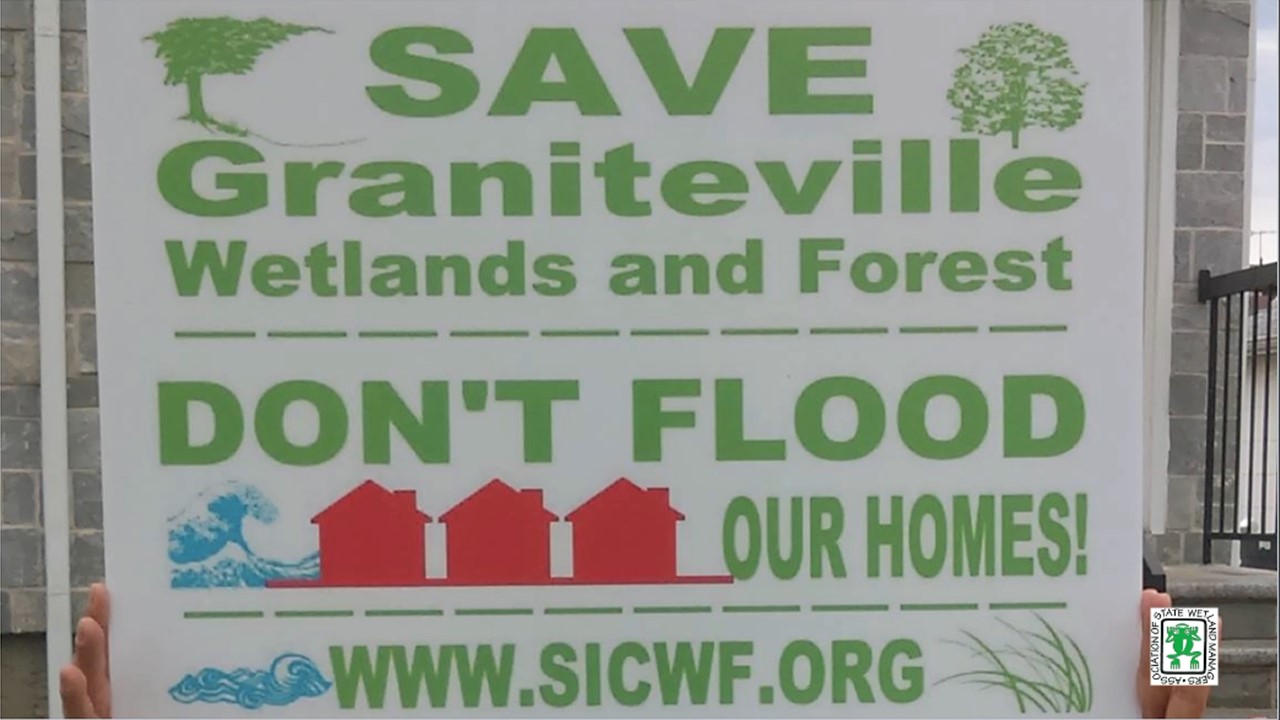
- Gabriella Velardi-Ward, Coalition for Wetlands and Forests, Staten Island, NY
- Ed Browne, Residents Against Flooding, Houston, TX
ABSTRACT
Recent research indicates that by 2050 more than 60 million may be vulnerable to “1-in-100-year” floods. Flood Forum USA is building a national, grassroots movement of communities affected by flooding. We are currently working with 25 flood advocacy group leaders from a dozen states, representing approximately 25,000 residents. Through our partnership with the American Geophysical Union, we have matched many of the groups with expert scientists from academia and federal agencies who are now working alongside them.
This webinar convenes flood group leaders to prompt a discussion on the state and national policies that flood survivors should be advocating for.
Please click only once on each video recording to view in this window.
Part 1: Introduction: Marla Stelk, Policy Analyst, Association of State Wetland Managers
Presenter: Sarah Wilkins, Thriving Earth Exchange, American Geophysical Union
Wetlands by Design: A watershed approach for Wisconsin
Held Tuesday, May 15, 2018 - 3:00 p.m. - 4:30 p.m. EST
INTRODUCTION
- Marla Stelk, Policy Analyst, Association of State Wetland Managers [PRESENTATION PDF]
PRESENTERS
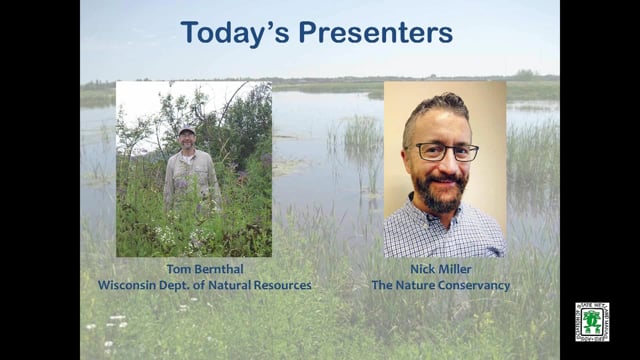
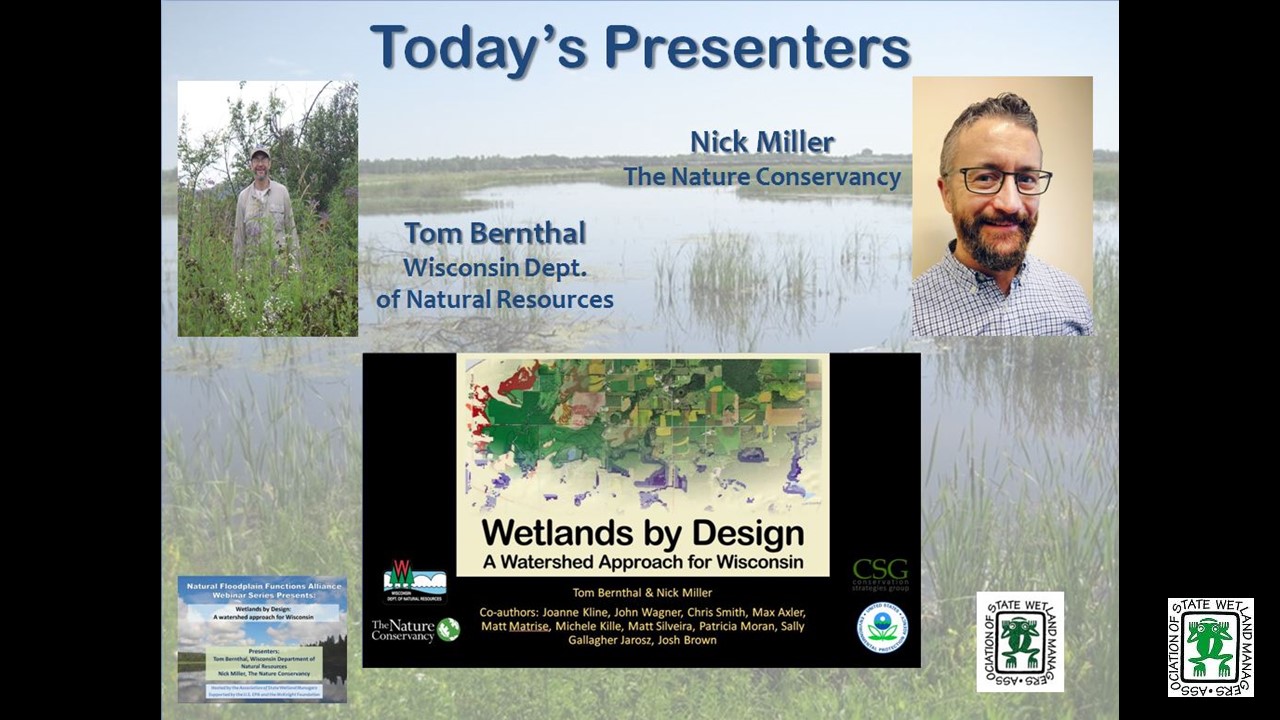
- Tom Bernthal, Wisconsin Department of Natural Resources [PRESENTATION PDF]
- Nick Miller, The Nature Conservancy [PRESENTATION PDF]
ABSTRACT
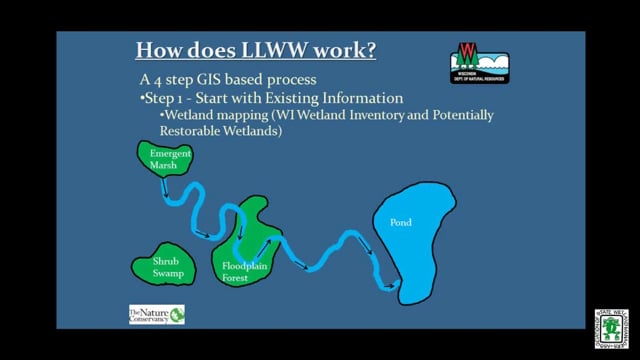
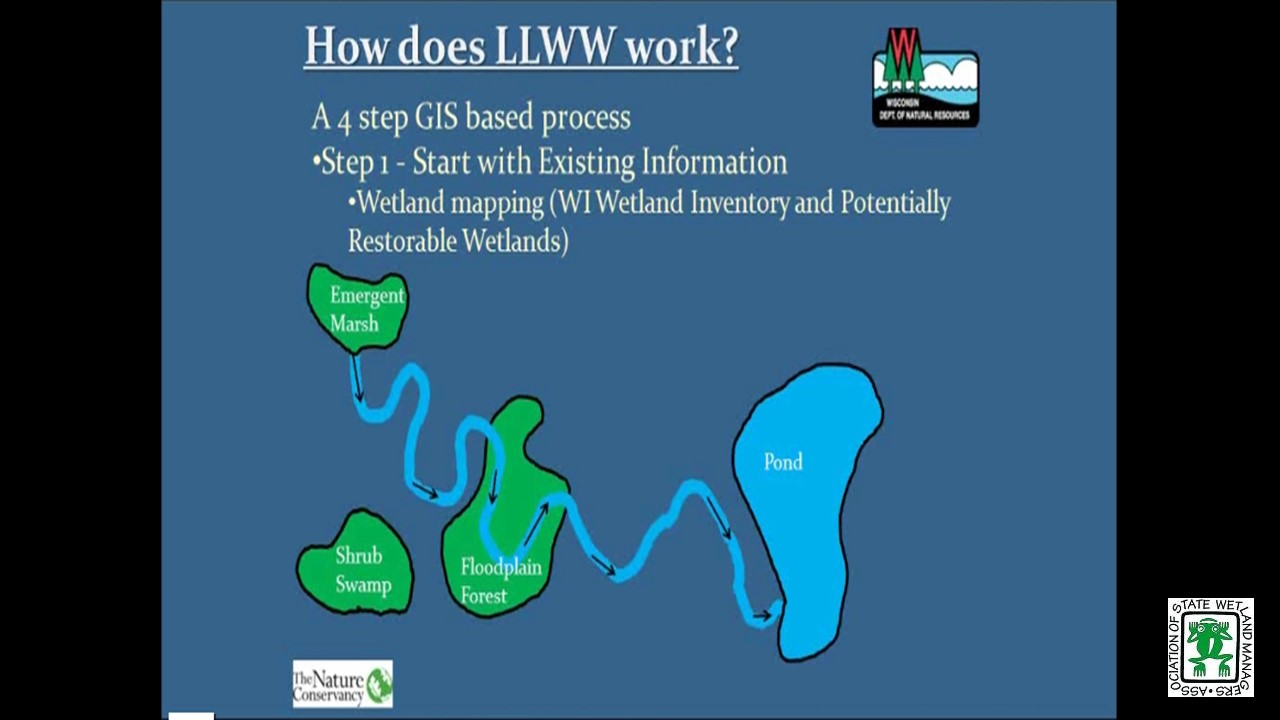
Wisconsin Department of Natural Resources and The Nature Conservancy created a decision support tool that ranks wetland preservation and restoration opportunities for all of Wisconsin’s watersheds based on potential to abate floods, purify water, protect shorelines, maintain streamflow, store carbon, and provide habitat. Wetlands by Design provides a Level 1 GIS analysis, was field validated in the Milwaukee River Basin, and aims to support many users with diverse goals (regulatory/mitigation programs, outdoor enthusiasts, municipalities working to abate floods, etc.). We discussed context and approach, show online mapping tool results, and look forward to a great conversation and feedback.
Please click only once on each video recording to view in this window.
Part 1: Introduction: Marla Stelk, Policy Analyst, Association of State Wetland Managers
Presenter: Nick Miller, The Nature Conservancy
Green Infrastructure Resources for Coastal Flood Risk Management
Held Tuesday, March 6, 2018 - 3:00 p.m. - 4:30 p.m. EST
HOST
Association of State Floodplain Managers
FEDERAL UPDATE
- Larry Larson, Association of State Floodplain Managers
- Jeanne Christie, Association of State Wetland Managers
PRESENTERS [PRESENTATION PDF]
- Maria Honeycutt, Ph.D., NOAA’s Office for Coastal Management
- Lauren Long, The Baldwin Group, NOAA’s Office of Coastal Management
- Tashya Allen, The Baldwin Group, NOAA’s Office of Coastal Management
ABSTRACT
Green infrastructure is gaining popularity as a strategy for protecting communities from coastal hazards, including coastal flooding and erosion. NOAA has developed a suite of products to help coastal managers and planners consider natural approaches to reduce coastal flooding associated with storms and sea level rise and protect coastal ecosystems.
During this webinar, participants learned about resources to help visualize their exposure to coastal flood hazards, explore green infrastructure techniques to reduce impacts, and identify open space to gain credit through FEMA’s Community Rating System. Participants also learned how their peers have tackled coastal flooding challenges using green infrastructure.
Please click only once on each video recording to view in this window.
Green Infrastructure Resources for Coastal Flood Risk Management
Held Tuesday, January 9, 2018 - 3:00 p.m. Eastern
INTRODUCTION
- Marla Stelk, Policy Analyst, Association of State Wetland Managers [PRESENTATION PDF]
PRESENTER
- Jennifer Pitt, Audubon [PRESENTATION PDF]
ABSTRACT
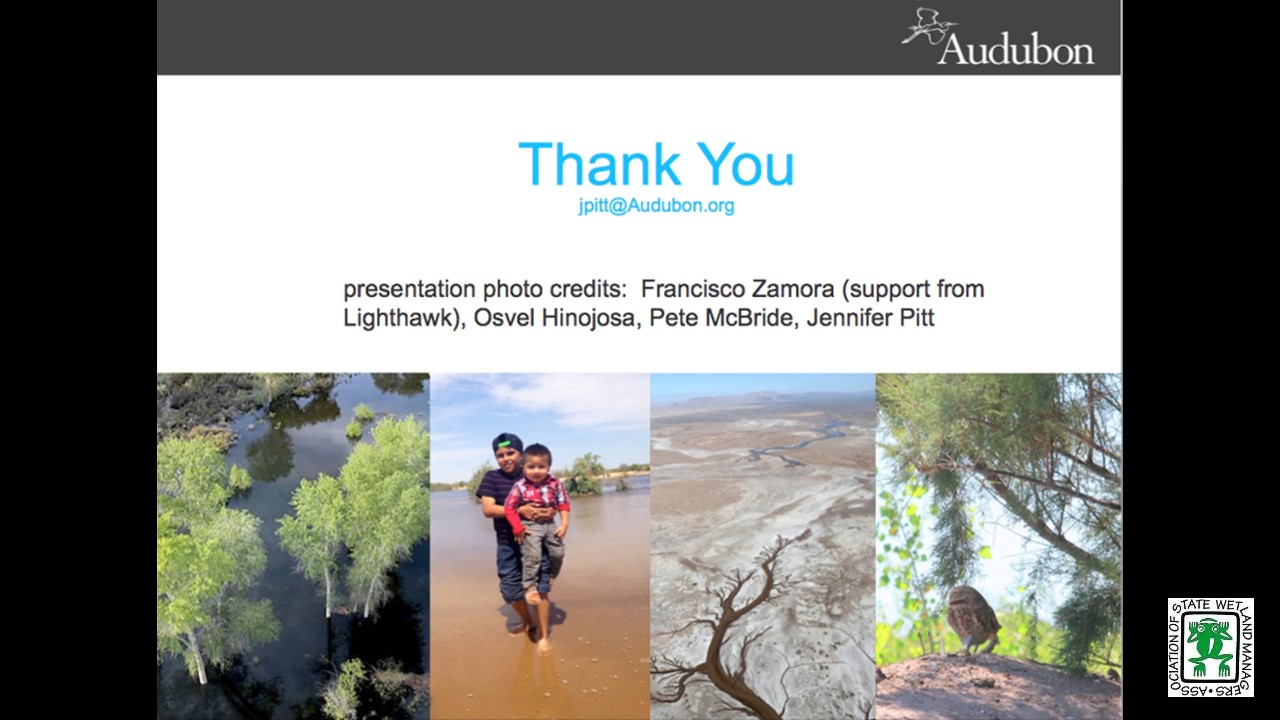
The Colorado River Delta has long been desiccated, due to over-allocation of water supplies and persistent drought. In a series of recent agreements, the United States and Mexico have begun a collaborative effort with non-governmental organizations to restore water to this ecosystem for the purpose of re-creating riparian and estuarine habitat, in the context of agreements that improve the two countries’ ability to manage a diminishing water supply.
Please click only once on each video recording to view in this window.
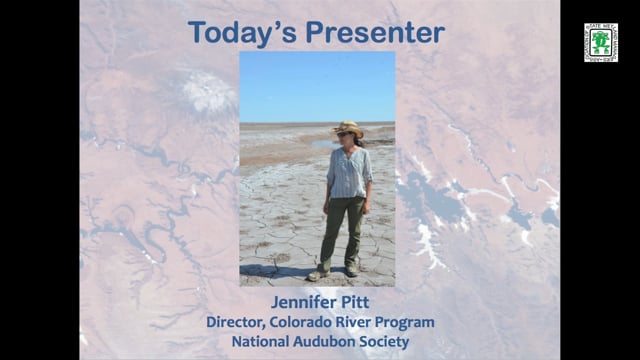
Part 1: Introduction: Marla Stelk, Policy Analyst, Association of State Wetland Managers Presenter: Jennifer Pitt, Audubon
View Past Natural Floodplain Functions Alliance Webinars
PDF List of Past Natural Floodplain Functions Alliance Webinar Recordings
Mid-Atlantic Wetlands Workgroup 2023 Annual Meeting:
Sharing Research, Best Practices and Lessons Learned in
Wetland Management
Thank you for joining us for the Mid-Atlantic Wetlands Workgroup’s (MAWWG) 2023 meeting to spur new projects, partnerships, and collaborative efforts to strengthen management of aquatic resources across the region.
Dates
Tuesday, November 14-16, 2023
Location
Lancaster Marriott Penn Square, 25 South Queen Street, Lancaster, PA 17603
Host Organizations
The National Association of Wetland Managers
MAWWG Purpose:
The Mid-Atlantic Wetland Workgroup (MAWWG) facilitates a community of practice among scientists and regulators to improve the quality and quantity of wetlands and inform resource management, including sharing strategies to monitor, assess, conserve and restore tidal and non-tidal wetlands in a scientifically sound and implementable manner with a focus on state, tribal and federal programs.
Agenda
Agenda provided below with links to presentation slides. See Resources below.
| TUESDAY, NOVEMBER 14TH | |
| Day 1 Morning | |
| 8:30am – 8:45am |
Opening Announcements
|
| 8:45am – 10:15am | Introductions and Icebreaker |
|
|
| 10:15am – 10:30am | BREAK |
| 10:30am – 12:00pm | State Share-Outs |
|
|
| Day 1 Afternoon | |
| 1:00pm – 2:30pm | Climate Change, Sea Level Rise, and Coastal Wetlands |
|
|
| 2:30pm – 2:45pm | BREAK | ||||
| 2:45pm – 4:15pm |
Wetland Restoration Targeting Panel
|
||||
| 4:15pm – 4:45pm | Day 1 Debrief | ||||
| WEDNESDAY, NOVEMBER 15th | |||||
| Day 2 Morning | |||||
| 8:30am – 8:45am | Opening Remarks | ||||
|
|||||
| 8:45am – 10:15am |
State Share-Outs
|
|||
| 10:15am – 10:30am | BREAK | |||
| 10:30am – 11:15pm |
Understanding Legacy Sediment Restoration Perspective
|
| Day 2 Afternoon | ||
| 11:30am – 4:15pm | Field Visit
|
|
| 4:15pm – 4:45pm | Day 2 Debrief | |
| THURSDAY, NOVEMBER 16TH | ||
| Day 3 Morning | ||
| 8:30am – 8:45am | Recap and Announcements | |
| 8:45am – 10:15am | Wetland Mapping, Monitoring, and Metric | |
|
||
| 10:15am – 10:30am | BREAK | |
| 10:30am – 12:00pm |
Common Metrics and Closing Discussion
|
|
More Than Dirt: Soil Health Needs to Be Emphasized in Stream and Floodplain Restorations
Natural Streams and the Legacy of Water-Powered Mills
Contact Information
Agenda
Ian Grosfelt
Environmental Analyst
National Association of Wetland Managers
(207) 892-3399; ian@nawm.org
Marla Stelk, Executive Director
National Association of Wetland Managers
(207) 892-3399; marla@nawm.org
General Information
Laura Burchill, Office Manager
National Association of Wetland Managers
500 Washington Avenue, Suite 201
Portland, ME 04103
(207) 892-3399; Fax: (207) 894-7992
laura@nawm.org
Towards Resilient and Sustainable Floodplains
Held Tuesday, December 19, 2017 - 3:00 p.m. Eastern

INTRODUCTION
- Marla Stelk, Policy Analyst, Association of State Wetland Managers [PRESENTATION PDF]
PRESENTER
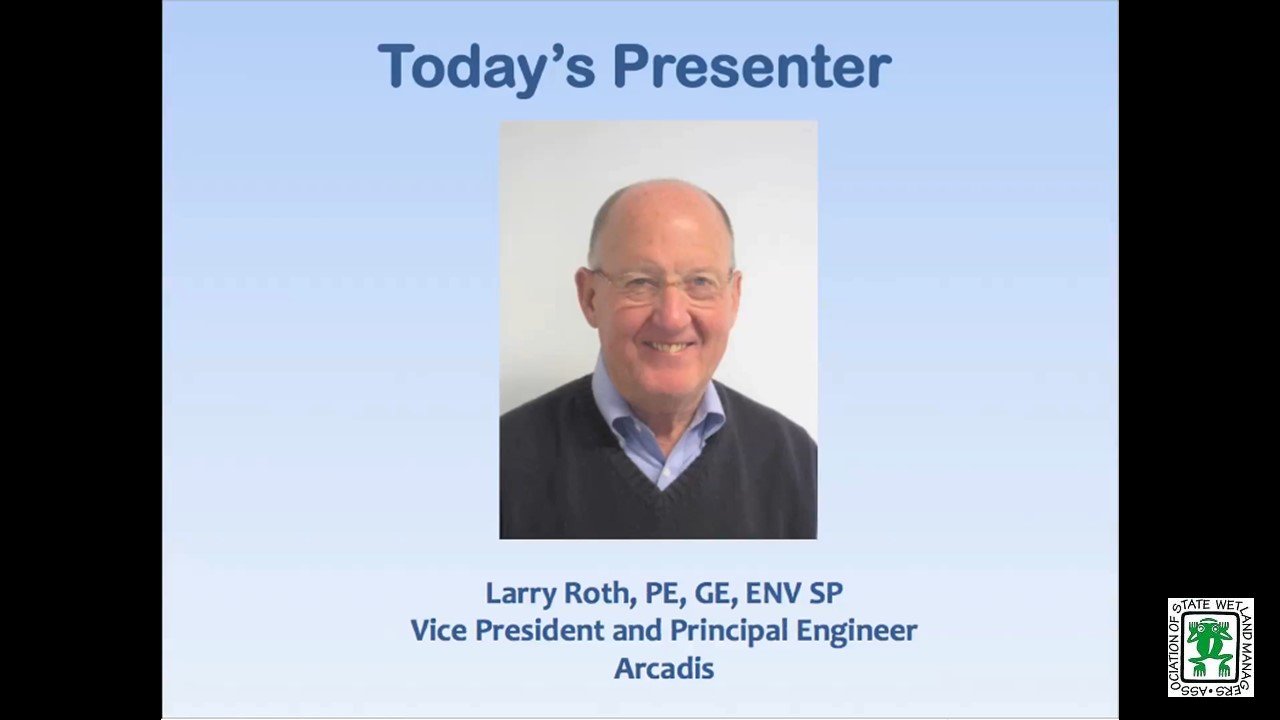
- Larry Roth, Arcadis [PRESENTATION PDF]
ABSTRACT
People like to live and work near water. When that means occupying the floodplains of rivers and streams, they accept flood risk as the price for the benefits that being near water brings. Too often, however, they fail to understand or appreciate what the threat of flooding means. In the past century, the dominant strategy for reducing the risk of riverine flooding is building levees. This strategy, which has resulted in nearly 30,000 miles of levees bordering our rivers and streams, is neither resilient nor sustainable, especially considering climate change. Levee systems choke floodplains, stifle natural processes, and damage the ecosystem. Levees also create a false sense of security and stimulate development behind them putting even more people, property, and infrastructure at risk. This recognition has led the Dutch to adopt “make room for the rivers,” a strategy designed to improve resiliency and sustainability by moving people and property out of harm’s way and returning natural functions to floodplains. The Dutch flood risk reduction strategy is not new; the Chinese implemented it in the Chengdu Plain over 2,000 years ago.
Flood risk management and levee design over the past century has focused on level-of-protection (LOP); for example, there has been widespread use of the one-percent LOP methodology, which is the basis of the National Flood Insurance Program. A major limitation of LOP methodology, however, is that risk is not quantified because consequences are not considered. When risk is not quantified, we cannot measure cost-effectiveness of options to reduce risk, and we too often make decisions regarding flood risk reduction based on judgment and stakeholder preferences, not on considerations of resilience and sustainability, and not on efficient use of resources. When we quantify flood risk using probability and consequences, we can also quantify risk reduction afforded by structural options (e.g., levees) as well as non-structural means, which enables consideration of solutions that are more resilient and sustainable.
LOP methodology ignores residual risk; as risk cannot be eliminated, tolerable risk guidelines (TRG) can be effective in quantifying the residual risk that society may be willing to accept to receive certain benefits, for example living near water. An improved understanding of risk supports policy formulation, informs risk management decisions, enables evaluation of trade-offs, promotes transparent risk communications, and opens the door for resilient and sustainable flood risk reduction. TRG is also useful in allocating scarce resources, achieving equity, and promoting efficiency. History as shown that use of LOP tends to favor levees over non-structural risk reduction measures, and too often evaluation of non-structural measures is performed to “check the box” rather than to search for more efficient means. Using TRG, we can measure the cost effectiveness of non-structural mitigation and application of strategies to take advantage of natural floodplain functions. TRG enables us to monetize risk reduction benefits for the triple bottom line – social, environmental, and financial – leading to more resilient and sustainable flood risk reduction systems. Part 1: Introduction: Marla Stelk, Policy Analyst, Association of State Wetland Managers
Please click only once on each video recording to view in this window.
Presenter: Larry Roth, Arcadis
Minnesota’s Overall and Watershed Approach to Flood Risk Reduction & Protection of Lakes & Streams
Held Thursday, November 30, 2017 3:00 p.m.–4:30 p.m. Eastern
HOST
Association of State Floodplain Managers
PRESENTER
- Ceil Strauss, State Floodplain Manager, Minnesota Department of Natural Resource [PRESENTATION PDF]
ABSTRACT
Minnesota has had a multi-faceted approach to reducing the risk of flood damage. Preservation of open spaces, higher regulatory standards, active watershed districts and a partnership of state and local funding for flood risk reduction projects mitigation projects has helped Minnesotans to reduce and avoid flood damages. Minnesota is also investing heavily in clean water, with funds generated by a constitutional amendment that dedicates sales tax to the effort. Minnesota's Watershed Approach framework has evolved from this opportunity to efficiently address waterbody restoration (TMDLs) and protection. Statewide efforts, like the governor's buffer law and water summit, and “One Watershed One Plan” pilots, also play a key role in achieving clean water goals. Still, widespread changes in the status quo of land and water management are needed for Minnesota to achieve success. Minnesota’s Overall and Watershed Approach to Flood Risk Reduction & Protection of Lakes & Streams
Please click only once on each video recording to view in this window.
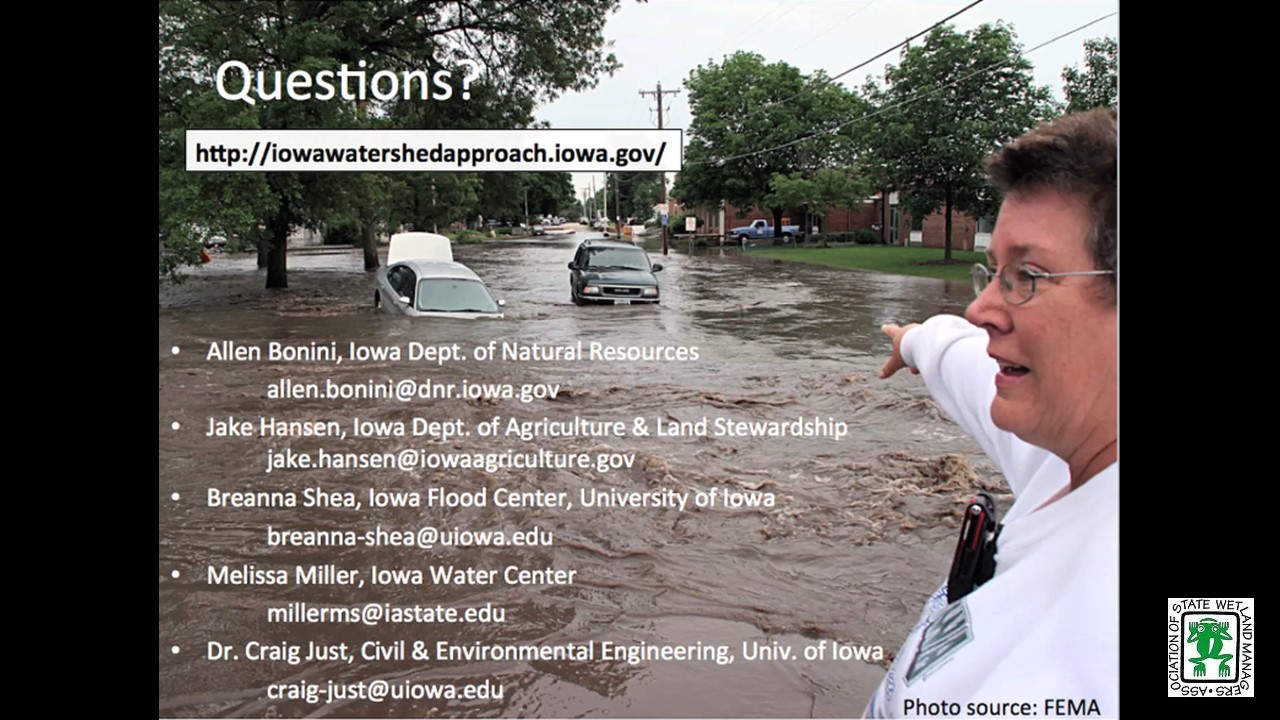
The Iowa Watershed Approach: A New Paradigm for Flood Resilience
 Held Tuesday, October 24, 2017 - 3:00 p.m. Eastern
INTRODUCTION
- Marla Stelk, Policy Analyst, Association of State Wetland Managers
[PRESENTATION-PDF]
PRESENTERS
- Allen Bonini, Iowa Department of Natural Resources
[PRESENTATION PDF] - Dr. Craig Just, University of Iowa
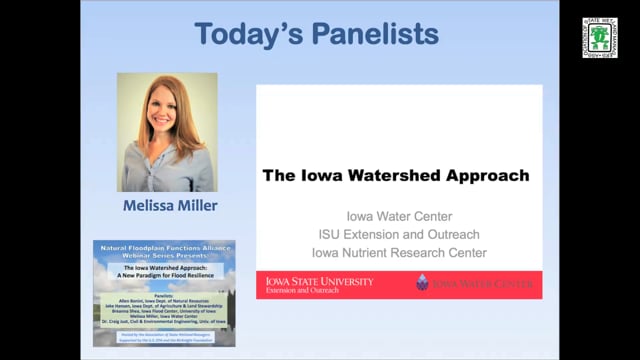
[PRESENTATION PDF] - Melissa Miller, Iowa Water Center
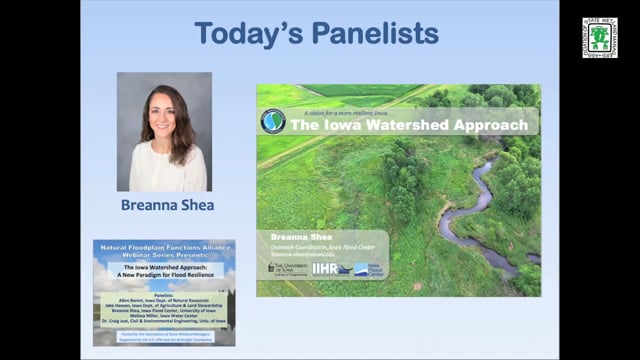
[PRESENTATION PDF] - Breanna Shea, Iowa Flood Center, University of Iowa
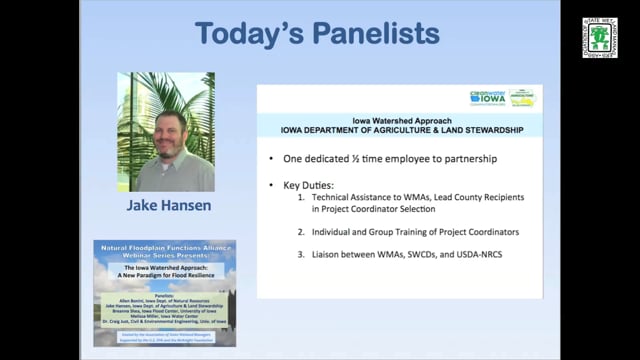
[PRESENTATION PDF] - Jake Hansen, Iowa Department of Agriculture and Land Stewardship- Division of Soil Conservation and Water Quality
[PRESENTATION PDF] - Jessica Turba, Disaster Recovery Operations Bureau of Iowa Homeland Security and Emergency Management
ABSTRACT
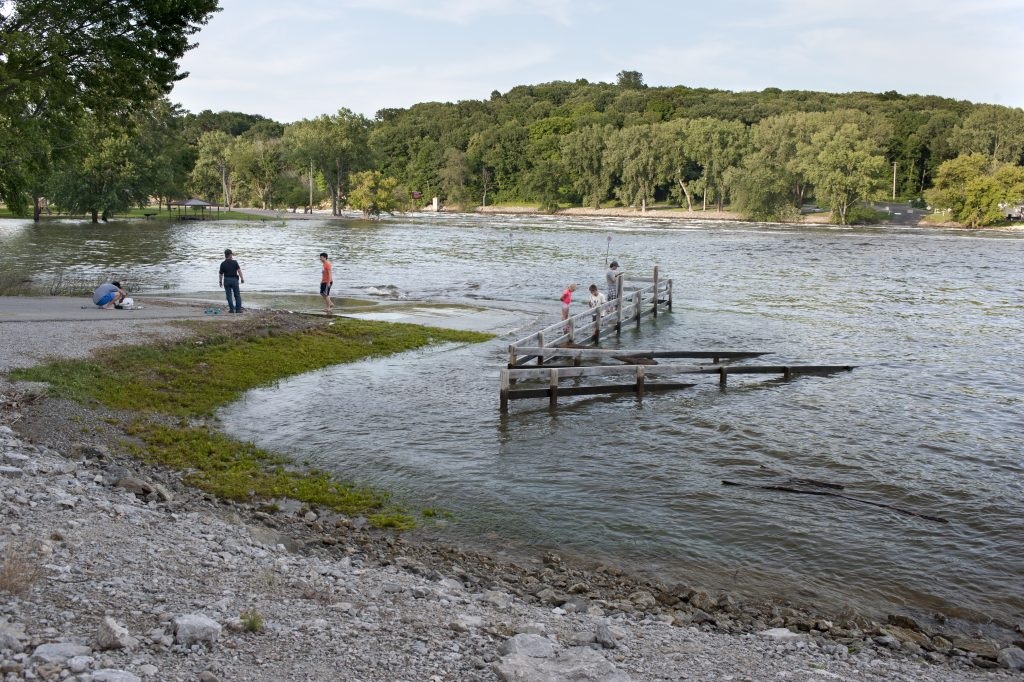
From 2011-2013, Iowa suffered eight Presidential Disaster Declarations, encompassing 73 counties and more than 70% of the state. Devastating as these events were, 2011-2013 do not represent Iowa’s worst flood years. Long-term data show that heavy precipitation and flooding events are increasing in frequency across the Midwest. Under these circumstances, a new paradigm for flood resilience is needed—one that decreases flood risk, improves water quality, and increases community flood resilience.
The Iowa Watershed Approach (IWA) is a watershed –scale program based on a holistic approach recognizing that 1) heavy precipitation and flooding events are increasing in frequency; 2) upstream activities impact downstream communities; 3) upstream and downstream communities need to voluntarily work together; 4) when possible, flooding should be addressed at its source, using science-based, reasonable, cost-effective practices; 5) improving community resilience to floods requires risk mitigation and community directed initiatives and planning; and 6) program strategies must also respect, protect, and sustain Iowa’s valuable agricultural economy, which provides food, fuel, and fiber for the world and sustains family incomes for many Iowans.
The IWA panelists discussed the program objectives, their specific role in the process, and the progress made in the first year of implementation.
Please click only once on each video recording to view in this window.
Part 1: Introduction: Marla Stelk, Policy Analyst, Association of State Wetland Managers


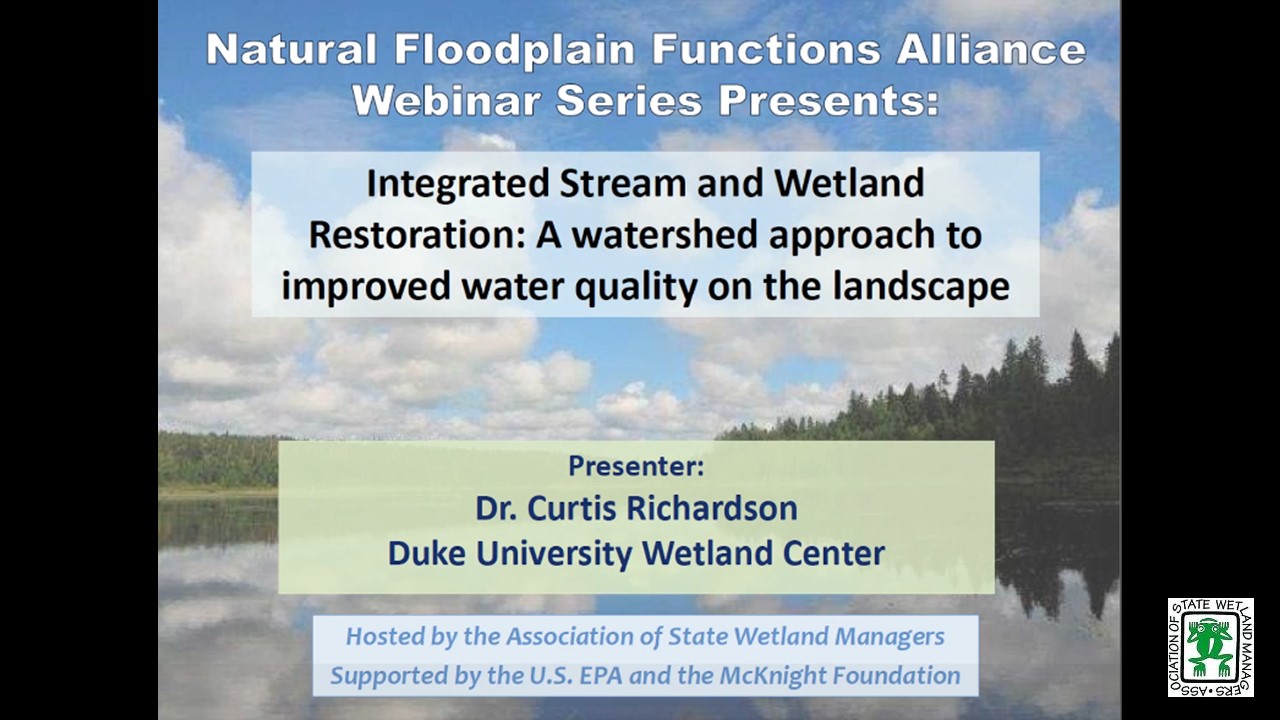
Integrated Stream and Wetland Restoration: A watershed approach to improved water quality on the landscape
Held July 25, 2017 - 3:00 p.m. ET
INTRODUCTION
- Marla Stelk, Policy Analyst, Association of State Wetland Managers [PRESENTATION PDF]
PRESENTER
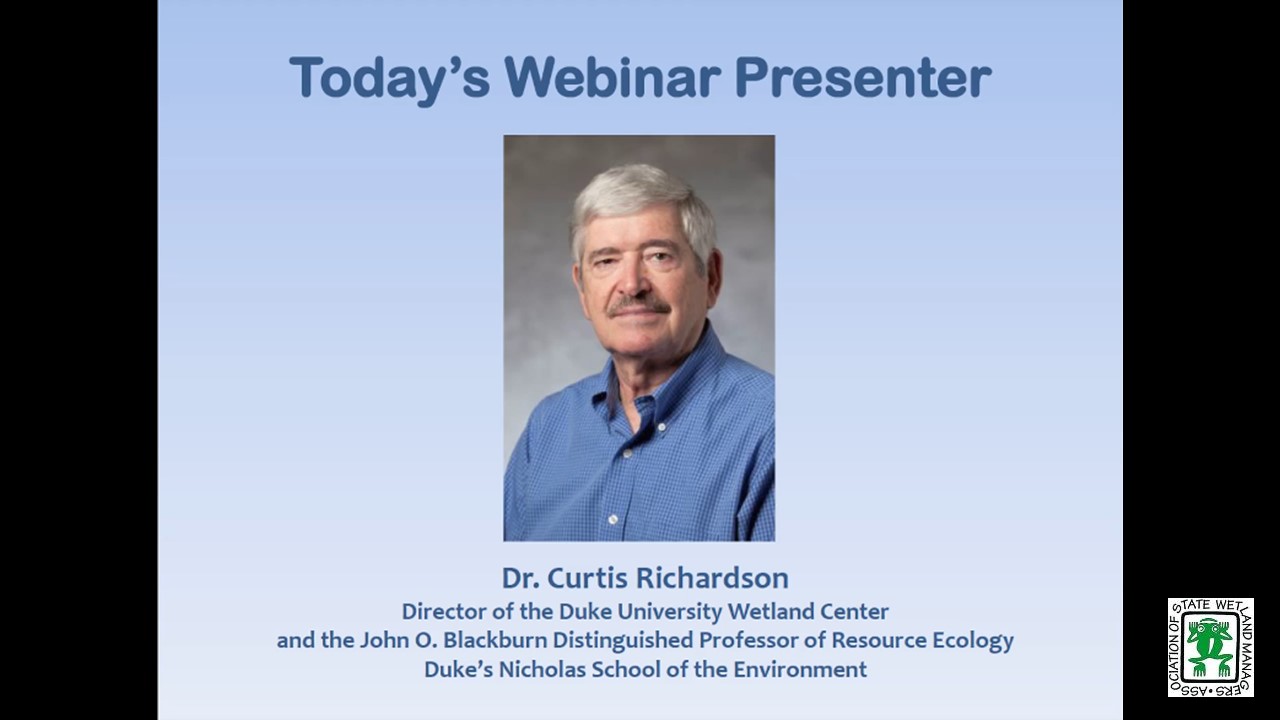
Dr. Curtis Richardson, Duke University Wetland Center [PRESENTATION PDF]
ABSTRACT
ABSTRACT
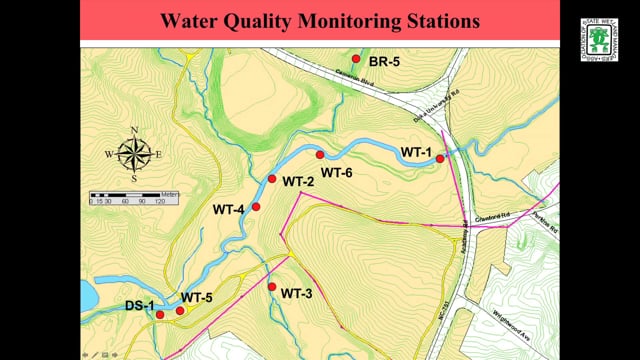
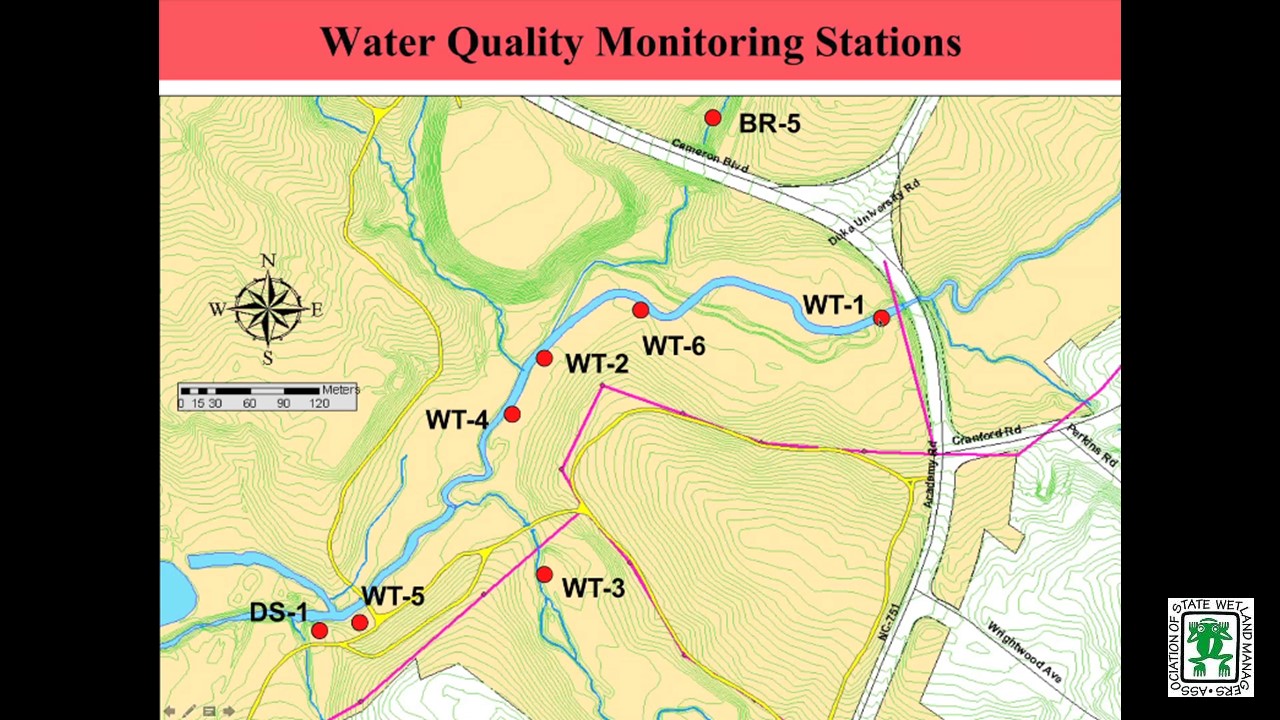
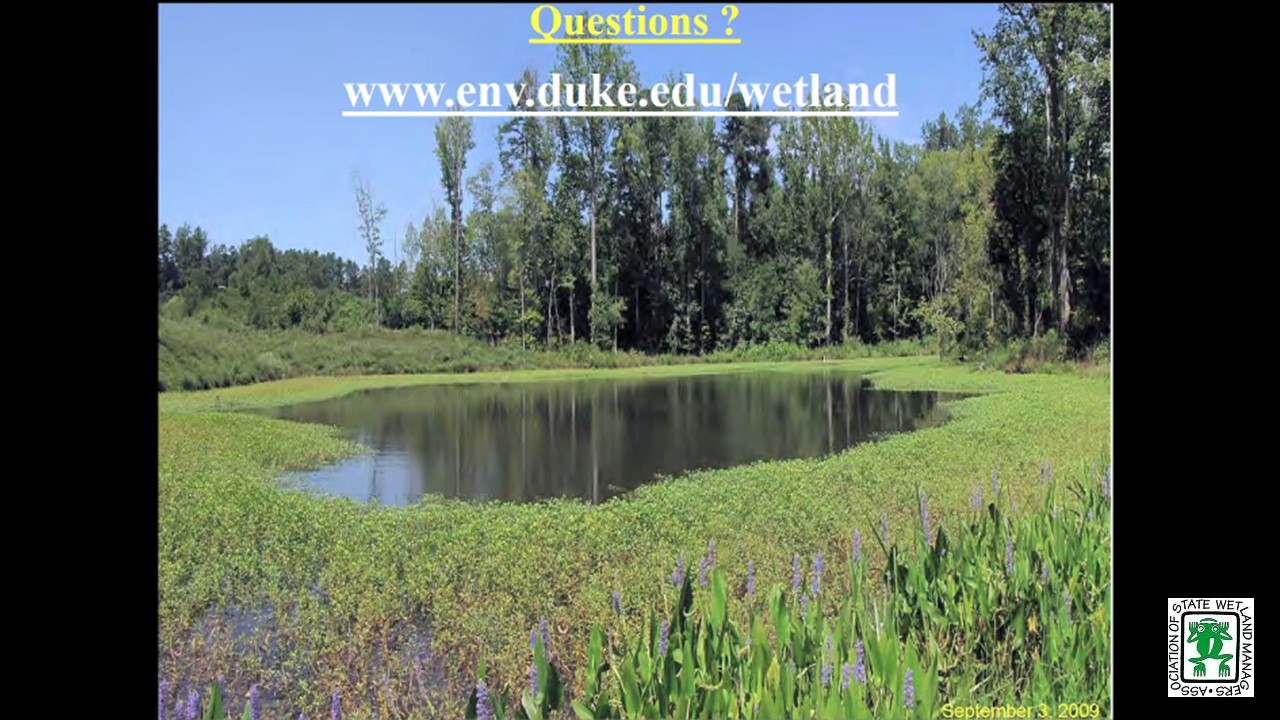
The Stream and Wetland Assessment Management Park (SWAMP)—a project of the Duke University Wetland Center—created over five acres of bottomland wetland floodplain and restored over 6,000 feet of degraded streambed near Duke’s West Campus. The University and government sponsors worked together on the project to improve regional water quality. SWAMP is a model system for nutrient and sediment retention, resulting in the University receiving nutrient credits from the City of Durham, North Carolina. Scientists from around the country study aspects of integrated stream and wetland restoration at SWAMP, and over 500 students each year use the site for classroom and research purposes.
Please click only once on each video recording to view in this window.
Part 1: Marla Stelk, Policy Analyst, Association of State Wetland Managers
Presenter: Dr. Curtis Richardson, Duke University Wetland Center
The Naturally Resilient Communities Project: Siting Guide and Case Studies Mainstreaming of Natural Infrastructure to Address Coastal and Riverine Flooding
Held Thursday, May 18, 2017 - 3:00 p.m.ET
HOST
Association of State Floodplain Managers
PRESENTER [PRESENTATION PDF]
- Nathan Woiwode, Risk Reduction and Resilience Project Manager, The Nature Conservancy
ABSTRACT
Naturally Resilient Communities is a partnership of county governments, professional engineers, community planners, floodplain managers and conservationists who work with communities to improve their quality of life and economies. Supported by the Kresge Foundation, the effort includes the National Association of Counties, the American Planning Association, the Association of State Floodplain Managers, the American Society of Civil Engineers, Sasaki Associates, and The Nature Conservancy.
Drawing from thirty nature-based flood and erosion control strategies and a growing body of case studies, the guide, which can be accessed at www.nrcsolutions.org, is designed to help municipal leaders and their staff in communities across the country identify potential solutions that could address their specific flooding concerns. Webex participants will learn about:
1. The origins and purpose of the Naturally Resilient Community project.
2. The strategy typology and how and why it was developed
3. Select case studies
4. A tour of the interactive siting guide.
Please click only once on each video recording to view in this window.
Presenters: Jeanne Christie, Association of State Wetland Managers and Nathan Woiwode, Risk Reduction and Resilience Project Manager, The Nature Conservancy
The Value of Nature: Practical Applications for Managers
Held Tuesday, February 21, 2017 - 3:00 p.m. EST
INTRODUCTION
Marla Stelk, Policy Analyst, Association of State Wetland Managers and Jeanne Christie, Association of State Wetland Managers [PRESENTATION PDF]
PRESENTER
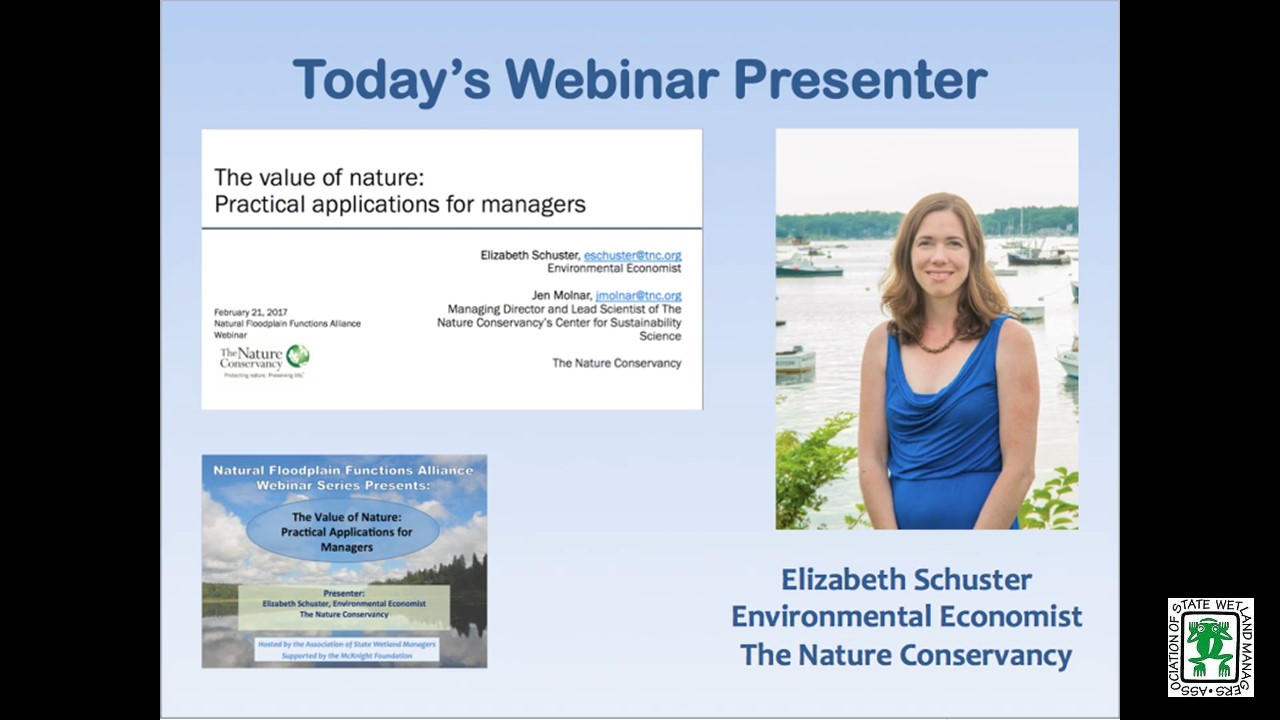
- Elizabeth Schuster, Environmental Economist, The Nature Conservancy [PRESENTATION PDF]
ABSTRACT
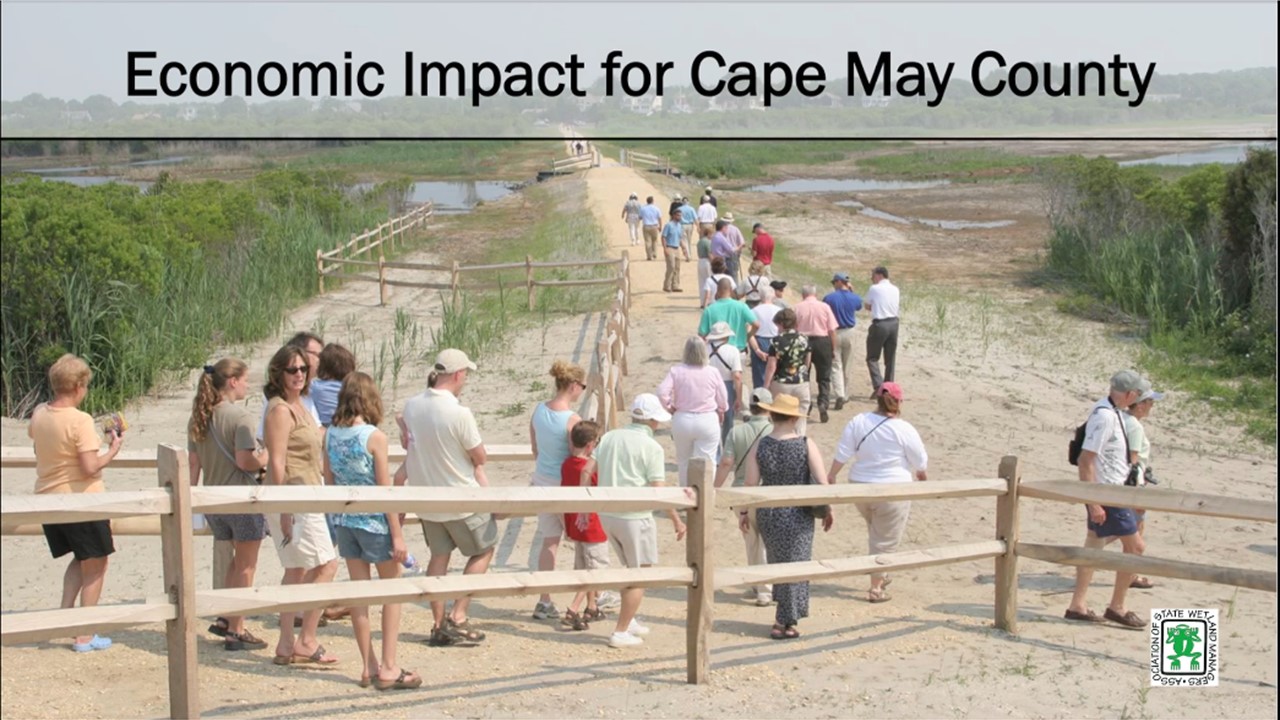
Coastal and freshwater systems – especially floodplains and wetlands - provide tangible economic value to communities, yet managers often do not incorporate the value of nature into decision making. This presentation has three components: 1) An overview of The Nature Conservancy (TNC) and partners’ guidebook, A guide for incorporating ecosystem service valuation into coastal restoration projects, 2) Practical examples of ecosystem service valuation from the field, 3) An introduction to the ESII tool to assess the value of nature in decision making, developed through a collaboration between TNC and Dow Chemical Company.
Please click only once on each video recording to view in this window.
Part 1: Marla Stelk, Policy Analyst, ASWM and Jeanne Christie, ASWM
Presenter: Elizabeth Schuster, Environmental Economist, The Nature Conservancy
View Past Natural Floodplain Functions Alliance Webinars
PDF List of Past Natural Floodplain Functions Alliance Webinar Recordings
Mapping Innovations at the Michigan DEQ: New approaches, tools and technologies
Held Wednesday, December 6, 2017 - 3:00 p.m. Eastern
INTRODUCTION
- Marla Stelk, Policy Analyst, Association of State Wetland Managers [PRESENTATION PDF]
PRESENTERS
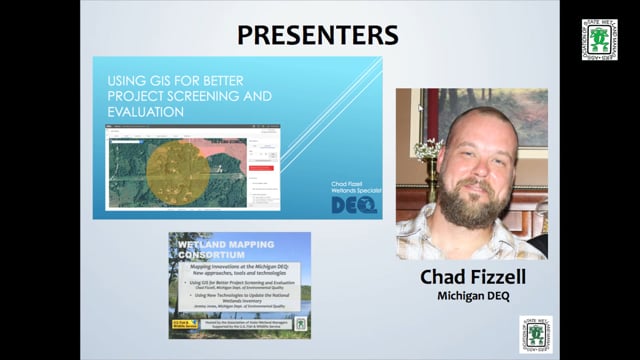
- Chad Fizzell, Michigan Department of Environmental Quality [PRESENTATION PDF]
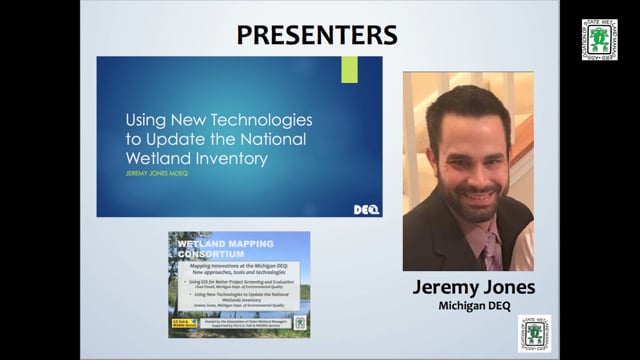
- Jeremy Jones, Michigan Department of Environmental Quality [PRESENTATION PDF]
ABSTRACTS
Chad Fizzell
Using GIS for Better Project Screening and Evaluation
With the release of MiWaters, Water Resources Division staff from the MDEQ are now relying on a GIS based screening tool to ensure coordination with all relevant state and federal partners and programs. This talk addressed the methodology, GIS layers utilized, and overall approach to screening projects spatially, introduced as part of the MIWaters rollout.
Jeremy Jones
Using New Technologies to Update the National Wetland Inventory
This portion of the webinar focused on the pilot project completed in conjunction with Ducks Unlimited. This pilot project utilized a semi-automated, object-based image analysis and segmentation process combined with head-up digitization and photo interpretation to produce an updated National Wetlands Inventory (NWI) for Kent and Washtenaw Counties in Michigan. This process utilizes high resolution 4-band imagery, high resolution lidar, and other ancillary datasets to create the new polygon areas.
BIOS
 Chad Fizzell works as a GIS Specialist in the Wetlands, Lakes, and Streams Unit within the Michigan Department of Environmental Quality. Chad has a degree in Environmental Science from Michigan State University, where he specialized in Spatial Information Processing. Chad has worked in the Wetlands program for 15 years and is the Department expert in the Landscape Level Assessment of Wetlands, Wetland Inventory, and Remote Sensing. Chad was also the lead in developing and adapting the NWI+ methodology and Landscape Level Wetland Functional Assessment process in Michigan and applying these concepts to watershed management in the State.
 Jeremy Jones has worked with geospatial technologies since 2006 and holds a Master’s Degree from Eastern Michigan University in Geographic Information Systems. As an employee for the Michigan Department of Environmental Quality Jeremy works on various projects including Enhanced NWI, coastal zone projects, enforcement cases, conservation easements and various aerial photo interpretation requests. Jeremy has worked with the National Wetland Inventory Data for over 10 years and is excited to share the improvements made to the data using the improved technologies available today.
Please click only once on each video recording to view in this window.
Part 1: Introduction: Marl Stelk, Policy Analyst, Association of State Wetland Managers
Developing a Spatially Enabled Wetland Program Website to Communicate the Importance of Tribal Land Management
Held Wednesday, October 18, 2017 - 3:00 p.m. Eastern
INTRODUCTION
- Marla Stelk, Policy Analyst, Association of State Wetland Managers[PRESENTATION PDF]
PRESENTER
- Andy Robertson, Executive Director, GeoSpatial Services, Saint Mary's University of Minnesota [PRESENTATION PDF]
ABSTRACT
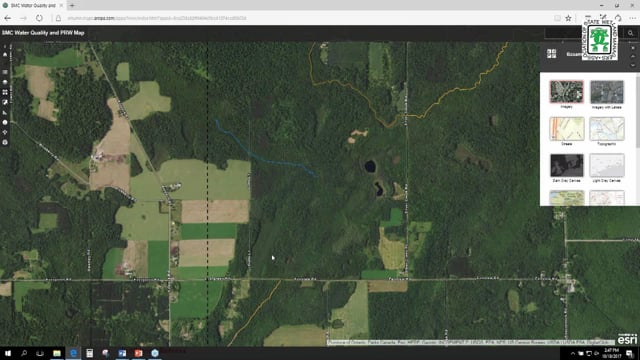
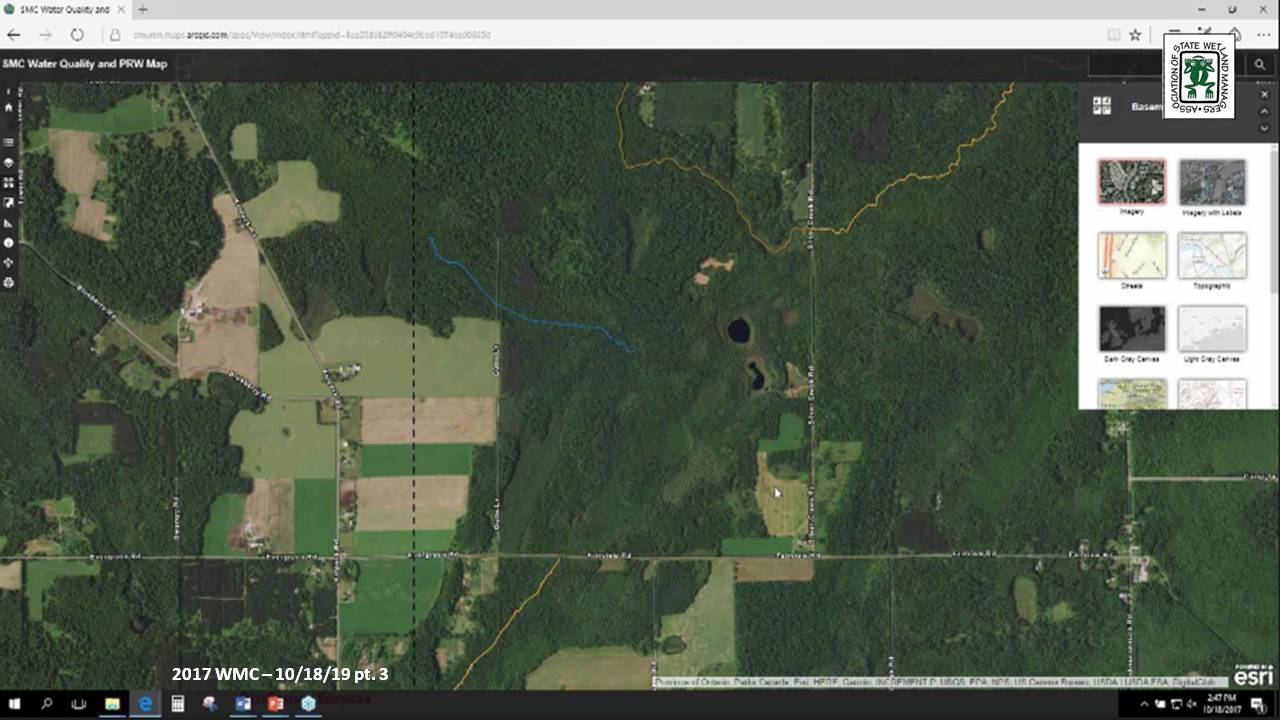
The Stockbridge-Munsee Mohican Community in Wisconsin is in the process of creating a web presence to share wetland program accomplishments and allow stakeholders and the public access to local wetland GIS data. A website with interactive map functions is being developed to communicate the wetland program’s goals, progress, and demonstration projects and provide interactive use and visualization of wetland and summary water quality data, educating tribal members and the public on the importance of wetlands. Once fully functional, this website will also be used to communicate water quality reporting data to EPA for ongoing monitoring. Technologies in use for this project include: ArcGIS Server, ESRI Story Maps, ArcGIS Online, ArcGIS Portal and ArcGIS Enterprise.
BIO
 Andy Robertson is currently Executive Director of GeoSpatial Services at Saint Mary’s University of Minnesota. In this role, Andy is responsible for oversight and management of all GeoSpatial Services projects, activities and staff. GeoSpatial Services is engaged in a wide variety of projects across the Lower 48 and Alaska including: wetland inventory; National Hydrography Dataset updates; spatial data development; and, natural resource condition assessments. Andy earned a Forest Technology Diploma from Sault College of Applied Technology in Ontario, Canada, a B.Sc. in Environmental Science from the University of Waterloo and completed postgraduate work in forest management at the University of Toronto. GeoSpatial Services has been a key partner of the USFWS and has been working for over 15 years to update legacy National Wetland Inventory data across the nation. Andy is a steering committee member for the ASWM Wetland Mapping Consortium and is co-chair of the Alaska GeoSpatial Council Wetland Technical Working Group.
Please click only once on each video recording to view in this window.
Part 1: Introduction: Marl Stelk, Policy Analyst, Association of State Wetland Managers
Presenter: Andy Robertson, Executive Director, GeoSpatial Services, Saint Mary's University of Minnesota
Mapping Wetland Inundation Dynamics Using Multi-Source Satellite Data
Held Wednesday, July 19, 2017 - 3 pm ET
INTRODUCTION
- Marla Stelk, Policy Analyst, Association of State Wetland Managers [PRESENTATION PDF]
PRESENTER
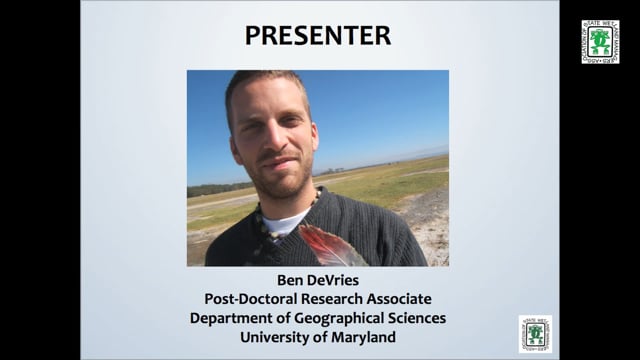
- Ben DeVries, Post-Doctoral Research Associate, Department of Geographical Sciences, University of Maryland [PRESENTATION PDF]
ABSTRACT
While the increasing availability of Earth observation has led to impressive advances in automated land cover mapping algorithms and products, wetlands often remain insufficiently or inconsistently represented in land cover products. On the other hand, while wetland inventories are able to provide significantly more thematic detail than general land cover products, their production usually relies on highly manual, static and expensive mapping methods. Surface inundation in wetlands is particularly difficult to quantify, given the complexity of the mixed water-vegetation-soil reflectance signatures as well as the highly dynamic nature of inundation in most wetland ecosystems. Optical data, such as those from the Landsat and Sentinel-2 satellite constellations, have been shown to be capable of detecting surface inundation at medium spatial resolution (~30m), allowing for the mapping of long-term trends. On the other hand, radar data are increasingly used to track surface inundation at regular time intervals, owing to the ability of radar energy to penetrate clouds. Despite these advantages, the temporal resolution of any single satellite sensor is often insufficient to adequately monitor surface inundation in wetlands, given the dynamic and often ephemeral nature of surface hydrology. New mapping approaches based on the fusion of optical and radar data streams shows promise in establishing regular fine-temporal-resolution records of wetland inundation. Multi-source data products related to wetland inundation are expected to support the ongoing development and updating of national and regional wetland inventories, support greenhouse gas modelling studies and the identification and quantification of wetland ecosystems.
BIO
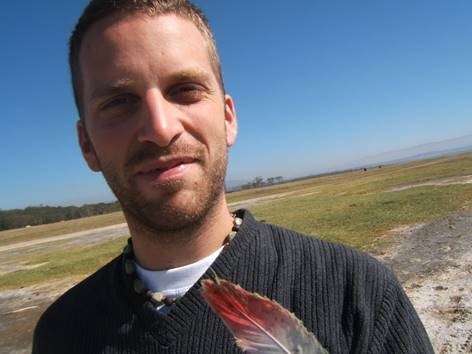 Ben DeVries is a Post-Doctoral Research Associate at the Department of Geographical Sciences, University of Maryland. He has a background in Remote Sensing and is currently developing algorithms for detecting and quantifying surface water inundation at fine spatial and temporal resolutions using multi-source satellite data. Ben earned his Ph.D. at Wageningen University in the Netherlands, where he studied forest dynamics in the tropics and developed novel methods using temporally dense Landsat time series data. He also earned his M.Sc. at Wageningen University, focussing on the role of surface and sub-surface hydrology on carbon emissions in degraded tropical peatlands.
Please click only once on each video recording to view in this window.
Part 1: Introduction: Marl Stelk, Policy Analyst, Association of State Wetland Managers
Presenter: Ben DeVries, Post-Doctoral Research Associate, Department of Geographical Sciences, University of Maryland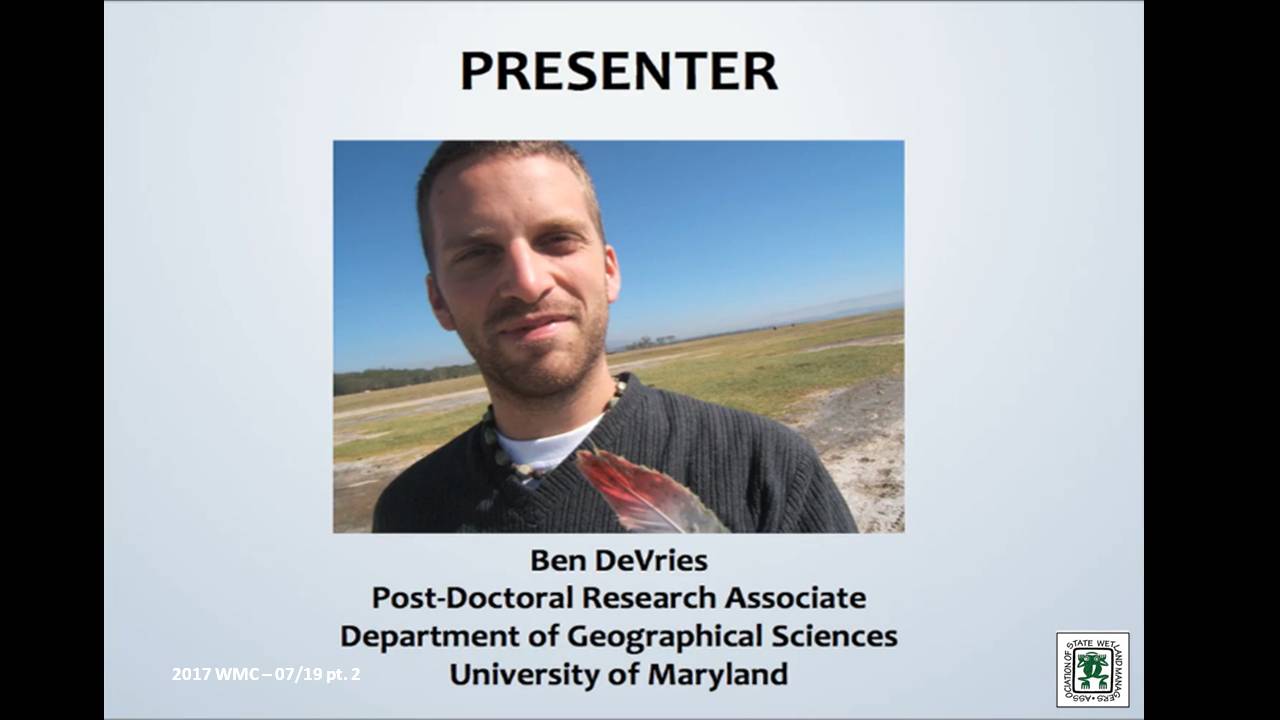

Wetland Mapping Consortium Workshop Webinars
The Wetland Mapping Consortium concurrent session below were held at the Association of State Wetland Managers annual meeting on April 12th.
Moving Wetland Restoration into Recommendations into Action: New Mapping/Monitoring Program Tends
Held Wednesday, April 12, 2017
PRESENTERS
- National Wetlands Inventory Wetland Mapping Targeting Tool and Data Use Trends - Megan Lang, U.S. Fish and Wildlife Service
- A Collaborative Approach to Establishing Wetland Management Priorities in Northcentral New Mexico - Andy Robertson, Saint Mary's University
- Wetland Functional Assessment in West Virginia - Elizabeth Byers, West Virginia Department of Environmental Protection
BIOS
Megan Lang is Chief Scientist for the U.S. Fish and Wildlife Service National Wetland Inventory Program and Project Lead for the Service’s Wetlands Status and Trends effort. Dr. Lang is an adjunct professor at the University of Maryland Department of Geographical Sciences and the Virginia Tech Department of Crop and Soil Environmental Sciences. She earned her undergraduate degree from the College of Charleston Departments of Geology and Biology, and her graduate degrees from the University of Maryland Department of Geographical Sciences. She serves as an Associate Editor for the journal Wetlands, and has published over 50 scientific articles and book chapters. Dr. Lang has been working to improve the assessment of aquatic ecosystems through field and remote sensing studies for over two decades. Before working for the U.S. Fish and Wildlife Service, Dr. Lang led the U.S. Department of Agricultural Mid-Atlantic Regional Wetland Conservation Effects Assessment Project.
Andy Robertson is currently Executive Director of GeoSpatial Services at Saint Mary’s University of Minnesota. In this role, Andy is responsible for oversight and management of all GeoSpatial Services projects, activities and staff. GeoSpatial Services is engaged in a wide variety of projects across the Lower 48 and Alaska including: wetland inventory; National Hydrography Dataset updates; spatial data development; and, natural resource condition assessments. Andy earned a Forest Technology Diploma from Sault College of Applied Technology in Ontario, Canada, a B.Sc. in Environmental Science from the University of Waterloo and completed postgraduate work in forest management at the University of Toronto. GeoSpatial Services has been a key partner of the USFWS and has been working for over 15 years to update legacy National Wetland Inventory data across the nation. Andy is a steering committee member for the ASWM Wetland Mapping Consortium and is co-chair of the Alaska GeoSpatial Council Wetland Technical Working Group.
Elizabeth Byers, M.S. is a Senior Wetland Scientist with the West Virginia Department of Environmental Protection. With an undergraduate degree in geology (Brown University) and graduate studies in hydrology (New Mexico Tech) and ecology (Oregon State University), she likes to explore the relationships between native plants, their environments, and the wildlife habitat they provide. Her current project at WVDEP is developing a field and GIS python-automated protocol for wetland functional assessment for mitigation and conservation purposes. Ms. Byers has recently completed conservation assessments of wetlands and red spruce forests in West Virginia for the National Vegetation Classification, and climate change vulnerability assessment of rare species and wetland communities. Prior to joining state government, Ms. Byers worked for 20 years with non-profits as an ecologist and conservationist in the Himalayas, East African rift, Rocky Mountains, and Appalachians. Her current passionate hobby is writing a field guide to the flora and ethnobotany of Mount Everest National Park.
Please click only once on each video recording to view in this window.
Part 1: Presenter: Megan Lang, U.S. Fish and Wildlife Service
Recent Updates to the EnviroAtlas Tool: Mapping Ecosystem Goods and Services
Held Wednesday, February 15, 2017 - 3:00 pm ET
INTRODUCTION
- Marla Stelk, Policy Analyst, Association of State Wetland Managers [PRESENTATION PDF]
PRESENTER
- Anne Neale, EnviroAtlas Project Lead, U.S. Environmental Protection Agency [PRESENTATION PDF]
ABSTRACT
EnviroAtlas is a multi-organization effort led by the U.S. Environmental Protection Agency to develop, host and display a large suite of nation-wide geospatial indicators of ecosystem goods and services. EnviroAtlas includes an Interactive Map which makes it easy for non-GIS users to view and analyze geospatial data including resources that could be particularly useful for wetland conservation, management, and research. An example of the many data layers available in EnviroAtlas is a nationwide 30-meter resolution data layer depicting suitability for wetland restoration which has been based on existing soils, land cover, and topography. Other data layers describe the land cover composition of water body buffers and connectivity to nutrient sources. Additional data layers relate to ecosystem markets and provide information about wetland mitigation banks. Other examples relate to biodiversity. More than 160 national indicators of ecosystem service supply, demand, and drivers of change provide a framework to inform decisions and policies at multiple spatial scales, educate a range of audiences, and supply data for research. A higher resolution component based on a one-meter land cover classification is also available, providing over 100 data layers for finer-scale analyses for selected communities across the US.
BIO
 Anne Neale is the Project Lead for EnviroAtlas, a web-based interactive tool that integrates over 300 mapped data layers and helps users understand the implications of planning and policy decisions on the benefits humans derive from ecosystems. Anne has a background in landscape ecology and ecosystem services and has been with EPA since 1991. She currently co-chairs a Working Group on Ecosystem Services housed within the White House Committee on Environment, Natural Resources and Sustainability, Subcommittee on Ecological Systems. She received a Bachelor of Science Degree in Environmental Studies from Utah State University in 1986. One of her primary research foci has been examining relationships between spatial patterns of landscape characteristics and conditions of and risks to ecological resources and the societal benefits they provide.
Please click only once on each video recording to view in this window.
Part 1: Introduction: Marl Stelk, Policy Analyst, Association of State Wetland Managers
Presenter: Anne Neale, EnviroAtlas Project Lead,U.S. Environmental Protection Agency
View Past Wetland Mapping Consortium Webinars
PDF List of Past Wetland Mapping Consortium Webinar Recordings
Publications
 The Association conducts research and publishes reports, guidebooks, news articles, brochures, white papers, and summaries of findings of symposia and workshops. These are available electronically to all interested individuals and organizations.